
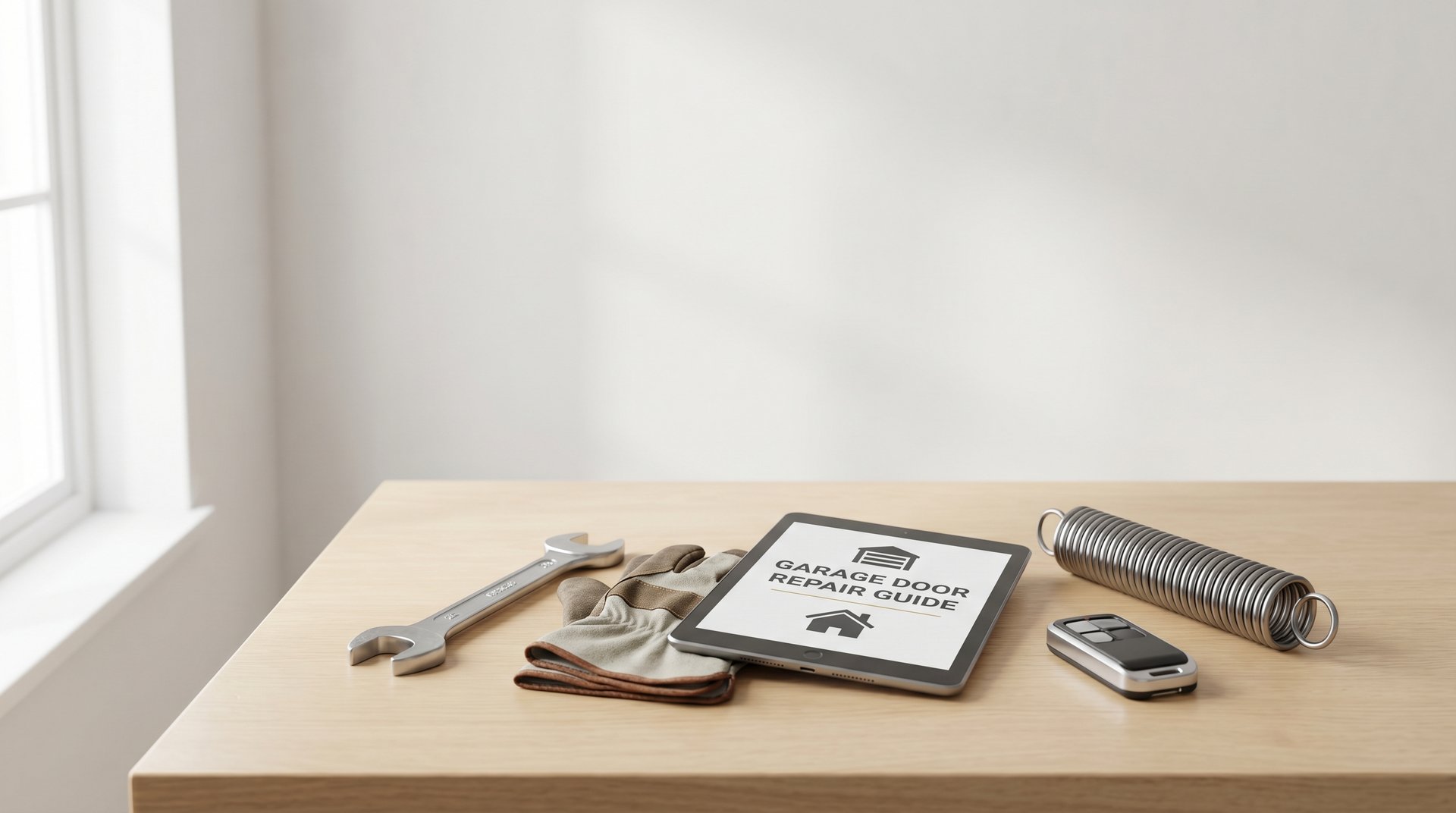
When your garage door won’t open or closes improperly, it disrupts your entire day and compromises your home’s security. This comprehensive garage door repair guide walks you through the most common problems homeowners face—from broken springs and faulty openers to misaligned tracks—and explains when you can DIY versus when to call a professional, helping you make informed decisions that save time and money.
It’s 6:45 AM on a Tuesday in Buffalo. You’re already running ten minutes late, coffee in hand, when you hit the garage door opener button and… nothing. You try again. The door shudders, groans, and stops halfway up. Now you’re stuck choosing between crawling under a half-open door or running back inside to leave through the front—either way, your morning just got a whole lot more complicated.
If this scenario sounds painfully familiar, you’re not alone. Garage doors are the largest moving component in most homes, operating an average of 1,500 times per year according to the International Door Association. That’s a lot of wear and tear, especially when you factor in Western New York’s brutal winters and scorching summers.
At 716 Garage Door Repair, we’ve been helping homeowners and business owners throughout the Buffalo area solve exactly these frustrations for years. We’re a locally owned company that understands how a malfunctioning garage door can throw off your entire day—or worse, compromise your home’s security and energy efficiency. In this guide, we’ll walk you through what causes garage door problems, which repairs you might tackle yourself, and when it’s time to call in the professionals. Think of this as your complete roadmap to understanding, maintaining, and fixing your garage door system.
Why Your Garage Door Stopped Working (And What It’s Trying to Tell You)
Your garage door doesn’t just fail randomly. It’s usually trying to tell you something went wrong, and the symptoms often point directly to the culprit. Let’s decode what your door might be saying.
The Door Won’t Open at All: This is often a power issue or a problem with your opener. Check if the opener unit has power, if the wall switch works, and whether your remote needs new batteries. If power isn’t the issue, your photo-eye sensors might be misaligned or blocked—these safety sensors prevent the door from closing on objects or people, but they can also stop the door from opening if they’re not communicating properly.
Opens Partially Then Stops: When your door gets halfway up and quits, you’re likely dealing with a broken spring. Springs counterbalance the door’s weight, and when one snaps, the opener can’t handle the full load. You might also hear a loud bang when a spring breaks—it sounds like a gunshot and usually happens while the door is closed. If you’re experiencing this issue, professional garage door spring repair is essential for safety.
Grinding, Scraping, or Squealing Noises: These sounds indicate friction where there shouldn’t be any. Worn rollers, dry tracks, or misaligned components create these annoying (and damaging) noises. Sometimes it’s as simple as needing lubrication, but persistent grinding often means rollers or hinges need replacement.
Door Moves Unevenly or Looks Crooked: If one side of your door hangs lower than the other, you’ve got a balance problem. This could stem from a broken spring on one side, a cable that’s come off its drum, or severely worn rollers. An unbalanced door puts extra strain on your opener and will cause premature failure if not addressed.
Here’s where Buffalo’s climate becomes the villain in this story. Our temperature swings—from below zero in January to over 80°F in July—create a perfect storm for garage door problems. Metal components expand and contract with temperature changes, which loosens hardware and accelerates wear on springs. Cold weather makes lubricants thick and sluggish, increasing friction. Ice buildup along the bottom seal can prevent the door from opening or trick the sensors into thinking there’s an obstruction.
Weatherstripping becomes brittle and cracks in extreme cold, letting in drafts that spike your heating bills. And those springs? Cold temperatures make the metal more brittle, increasing the likelihood of sudden failure during winter months when you need your garage door most.
Before you pick up the phone, run through this quick diagnostic checklist. First, check the obvious: Is the opener plugged in? Are the batteries in your remote fresh? Look at the photo-eye sensors near the floor on each side of the door—are they aligned and free of dirt or spider webs? Try operating the door with both the wall button and the remote to rule out a transmitter problem.
Next, look and listen. Does the opener motor run but the door doesn’t move? That suggests a disconnected trolley or broken gear inside the opener. Do you see a gap in the springs above the door? That’s a broken torsion spring. Is there a cable hanging loose? That’s a serious safety issue that needs immediate professional attention.
The Anatomy of a Garage Door System
Understanding how your garage door works isn’t just interesting—it helps you communicate problems clearly and make informed decisions about repairs. Let’s break down the key players in this mechanical ballet.
Springs: The Heavy Lifters: Your garage door weighs between 150 and 400 pounds depending on size and material, yet you can lift it with one hand when it’s properly balanced. That’s because springs do about 90% of the work. Torsion springs mount horizontally above the door and twist to store energy. Extension springs run along the tracks on either side and stretch to provide lifting force. Both types are under extreme tension—we’re talking hundreds of pounds of force—which is why they’re so dangerous to work on without proper training.
Springs are rated for a certain number of cycles (one cycle equals opening and closing the door once). Most residential springs are rated for 10,000 cycles, which translates to roughly seven to nine years of typical use. Do the math: if you open your door four times daily, that’s about 1,500 cycles per year. Buffalo’s temperature extremes can shorten this lifespan considerably.
Tracks and Rollers: The Guidance System: Metal tracks on each side of your door opening guide the rollers as the door moves up and down. The rollers—small wheels that fit into these tracks—need to move smoothly and stay properly aligned. Over time, rollers wear out (especially plastic ones), tracks can get dented or bent, and the whole system can shift out of alignment. When this happens, your door binds, makes noise, or won’t move at all.
Cables: The Safety Net: Steel cables work with the springs to lift the door. On extension spring systems, the cables run through the springs and attach to the bottom corners of the door. On torsion spring systems, cables wind around drums at each end of the spring shaft. When a cable frays or breaks, the door becomes dangerously unbalanced and can fall unexpectedly. This is not a “wait and see” situation—broken cables require immediate professional repair.
Panels: The Door Itself: Whether you have a sectional door (made of horizontal panels connected by hinges) or a one-piece door, panel damage affects both appearance and function. Dented panels can bind in the tracks. Severely damaged panels may need replacement, though sometimes individual sections can be swapped out without replacing the entire door.
The Opener: The Brain and Muscle: Your garage door opener consists of a motor unit, a trolley system that connects to the door, and various safety features. Modern openers include sensors that detect obstructions, automatic reverse functions, and rolling-code technology to prevent break-ins. The opener motor doesn’t actually lift the door—remember, the springs do that heavy lifting. The opener just provides the force to get the balanced door moving and keep it moving smoothly. For comprehensive garage door maintenance and expert repairs, understanding these components is essential.
Here’s why understanding these components helps your wallet: springs and rollers wear out fastest because they handle the most stress and friction. Knowing this helps you budget for eventual replacement and understand why regular maintenance focuses heavily on these parts. When a technician recommends replacing your springs, you’ll understand it’s not upselling—it’s addressing the component most likely to fail and cause a complete system shutdown.
DIY Fixes vs. Professional Repairs: Know the Difference
There’s a fine line between being handy and being hazardous when it comes to garage door repair. Let’s talk about what you can safely tackle yourself and what absolutely requires professional expertise.
Safe DIY Territory: Maintenance and Minor Adjustments
Lubricating moving parts is the single most valuable thing you can do for your garage door, and it’s completely safe. Every three to six months, apply a silicone-based or lithium-based spray lubricant to rollers, hinges, springs, and tracks. Avoid WD-40—it’s a solvent, not a lubricant, and actually attracts dirt. This fifteen-minute task reduces friction, quiets noisy doors, and extends component life significantly.
Tightening hardware is another safe DIY job. The vibration from 1,500 annual cycles gradually loosens bolts and screws. Walk along your door with a socket wrench and tighten any loose roller brackets, hinges, and track fasteners. Don’t overtighten—snug is sufficient.
Cleaning the tracks prevents buildup that can interfere with smooth operation. Use a damp cloth to wipe out dirt, leaves, and debris. You can use a household cleaner for stubborn grime, but make sure to dry the tracks thoroughly afterward.
Testing and cleaning the photo-eye sensors takes just minutes. These sensors sit about six inches off the ground on each side of the door opening. Wipe them clean with a soft cloth, make sure they’re aligned (most have indicator lights that glow when properly aligned), and test them by placing an object in the door’s path—the door should reverse immediately when closing.
You can also safely replace weatherstripping along the bottom of your door. This rubber seal keeps out drafts, rain, and pests. When it cracks or tears, simply pull out the old strip and slide in a new one. Hardware stores carry universal weatherstripping that fits most doors.
Danger Zone: Leave These to the Professionals
Spring replacement is the most dangerous garage door repair, period. Torsion springs are wound under extreme tension—enough to cause severe injuries including broken bones, lacerations, and even death if they snap during amateur repair attempts. Extension springs, while slightly less dangerous, still pose serious risks. Professional technicians have specialized tools and training to safely release and rebuild spring tension. This is not the place to save money with DIY.
Cable repair falls into the same category. Cables are under tremendous tension and can whip violently if they break or come loose during repair. A professional knows how to safely secure the door before working on cables and has the right tools to properly attach and tension them.
Track realignment requires precision and often involves adjusting or replacing mounting brackets while supporting the door’s weight. Get it wrong, and you risk the door falling or binding permanently. Professionals use levels and specialized measuring tools to ensure tracks are perfectly parallel and properly spaced.
Opener motor issues—whether it’s a stripped gear, a failed circuit board, or a burned-out motor—require electrical knowledge and specific diagnostic tools. Modern openers also need to be programmed correctly to ensure safety features work properly. A technician can quickly diagnose whether your opener needs a simple adjustment, a specific part replacement, or complete replacement.
Panel replacement seems straightforward but involves disconnecting hardware, managing the door’s weight, and ensuring the new panel integrates properly with your existing system. Improper installation can create balance issues or stress points that lead to other failures.
The bottom line? If it involves springs, cables, or structural components, or if you feel even slightly uncertain about the repair, call a professional. The cost of a service call is far less than an emergency room visit or the damage caused by a falling garage door. At 716 Garage Door Repair, we’ve seen too many injuries and secondary damage from well-intentioned DIY attempts on high-risk repairs.
What to Expect During a Professional Garage Door Repair Visit
Understanding the repair process helps you know what to expect and ensures you’re getting quality service. Here’s how a professional garage door repair visit should unfold.
The Inspection and Diagnosis Process
A good technician doesn’t just fix the obvious problem—they identify the root cause. When we arrive at your home or business, we start with a comprehensive inspection. We’ll ask you to describe what happened: when you first noticed the problem, what sounds you heard, and whether the issue is intermittent or constant. This information provides valuable diagnostic clues.
Next comes the hands-on inspection. We’ll manually operate the door (with the opener disconnected) to check balance and feel for binding or resistance. We’ll examine springs for wear or breakage, inspect cables for fraying, check rollers for wear, and look at tracks for alignment issues. We’ll test the opener’s safety features, check the force settings, and examine the drive mechanism for worn gears or other internal problems.
This thorough approach often reveals issues you didn’t know existed. For example, you might call about a noisy door, and we discover that while worn rollers are causing the noise, you also have a spring that’s near the end of its life. Addressing both issues during one visit prevents a second service call in a few weeks when that spring fails.
Transparent Pricing: No Surprises
Before we touch a single tool, you’ll receive a clear estimate that breaks down parts and labor costs. We explain what needs to be fixed, why it needs to be fixed, and what happens if you postpone the repair. This transparency lets you make informed decisions about your home or business.
Reputable companies provide written estimates and never pressure you into unnecessary upgrades or repairs. If we find multiple issues, we’ll prioritize them: what needs immediate attention for safety, what can wait a few months, and what’s purely preventive. You decide what fits your budget and timeline.
We also explain warranty coverage upfront. Quality companies stand behind their work with warranties on both parts and labor. At 716 Garage Door Repair, we want you to feel confident that the repair will last, not just get you through the next few weeks.
Typical Repair Timelines
Most common repairs happen the same day, often within an hour or two. Spring replacement typically takes 45 minutes to an hour once the technician has the correct springs on the truck. Roller replacement might take 30 to 45 minutes depending on how many rollers need changing. Sensor alignment or minor opener adjustments can be done in 15 to 20 minutes.
Panel replacement takes longer—usually two to three hours—because it involves disconnecting hardware, removing the damaged panel, installing the new one, and ensuring everything is properly balanced and aligned. Opener replacement can take one to two hours depending on the model and whether any additional wiring or modifications are needed. For situations that can’t wait, our 24/7 emergency garage door repair service ensures you’re never left stranded.
For commercial properties with larger, heavier doors or more complex systems, repairs may take longer and sometimes require scheduling a return visit if special-order parts are needed. We always communicate realistic timelines so you can plan accordingly, especially if the repair affects your business operations.
The goal is always to restore your door to safe, reliable operation as quickly as possible while doing the job right. Rushing through a repair to save time often leads to callbacks and customer frustration—neither of which serves anyone well.
Preventing Future Breakdowns: Simple Maintenance That Saves Money
An ounce of prevention really is worth a pound of cure when it comes to garage doors. Regular maintenance catches small problems before they become expensive emergencies and significantly extends your system’s lifespan.
Your Seasonal Maintenance Checklist
Spring and fall are ideal times for garage door maintenance in Western New York. As temperatures moderate, take an hour to give your door some attention.
Start with a visual inspection. Look at springs for signs of wear, rust, or separation. Examine cables for fraying—even a few broken strands mean replacement is needed soon. Check rollers for cracks, chips, or flat spots. Inspect the weatherstripping along the bottom and sides of the door for cracks or gaps.
Test the door’s balance by disconnecting the opener (pull the red emergency release handle) and manually lifting the door halfway up. A properly balanced door should stay in place. If it falls or rises on its own, the springs need adjustment—call a professional for this.
Lubricate all moving parts with a silicone or lithium-based spray. Hit the rollers, hinges, springs, and the track where the rollers make contact. Don’t overdo it—a light coating is sufficient. Wipe away any excess that drips.
Clean and test the photo-eye sensors. Make sure the lenses are clean and the sensors are aligned. Test them by placing an object in the door’s path while closing—the door should immediately reverse.
Check all hardware and tighten any loose bolts or screws. Pay special attention to the roller brackets and hinges, which take the most stress.
Before winter hits, pay extra attention to your weatherstripping. Buffalo winters are hard on rubber seals, and replacing worn weatherstripping before the first snow prevents drafts and ice buildup. Also consider having your springs inspected professionally before winter—cold weather is when springs most often fail, and you don’t want to be stuck with a broken door in January.
Warning Signs to Watch For
Between maintenance sessions, stay alert for these red flags that indicate developing problems. A door that’s slower to open or close than usual often signals spring fatigue or opener issues. Increasing noise levels suggest worn rollers or dry components. Any jerking or hesitation during operation points to binding, misalignment, or failing parts.
Visual cues matter too. Rust on springs indicates they’re nearing the end of their lifespan. Gaps in springs mean they’ve already broken. Frayed cables need immediate replacement. Dented or damaged tracks will cause binding and uneven operation.
If your door doesn’t close completely or leaves gaps at the bottom, you’re losing energy efficiency and potentially letting in pests and moisture. This could be a worn weatherstripping issue, a balance problem, or a limit switch adjustment on your opener.
The Value of Professional Maintenance
While DIY maintenance helps, annual professional service provides deeper value. A trained technician spots subtle issues you might miss—a spring that’s lost tension but hasn’t broken yet, a cable starting to fray, or a roller bearing that’s beginning to fail. Addressing these during a scheduled maintenance visit costs far less than an emergency repair call.
Professional maintenance also includes adjustments that require specialized tools and knowledge: fine-tuning spring tension, adjusting opener force settings, and ensuring all safety features work correctly. Many companies offer maintenance plans that include annual service visits at a discounted rate, providing both peace of mind and budget predictability.
Choosing the Right Garage Door Repair Company in Buffalo
Not all garage door companies are created equal. Choosing the right one ensures quality work, fair pricing, and reliable service when you need it most.
Questions to Ask Before You Hire
Start with licensing and insurance. Ask if the company is properly licensed to operate in New York and carries both liability insurance and workers’ compensation. This protects you if something goes wrong during the repair or if a technician is injured on your property.
Inquire about warranties. What’s covered, and for how long? Quality companies warranty both parts and labor, typically for at least one year. Be wary of companies that only warranty parts or offer very short warranty periods.
Ask about response times, especially for emergency service. If your door is stuck open and won’t close, you need help quickly for security reasons. Companies that prioritize customer service offer same-day or next-day service for urgent situations.
Request references or check online reviews. What do other Buffalo-area homeowners and businesses say about their experience? Look for patterns in reviews—consistent mentions of professionalism, fair pricing, and quality work are good signs. You can see what customers are saying on our Google Business Profile page.
Find out if they provide written estimates before starting work. Any reputable company will assess the problem and give you a clear price before proceeding. Verbal estimates or vague “we’ll see what we find” responses are red flags.
Red Flags That Should Send You Elsewhere
Be cautious of companies that pressure you into immediate decisions or try to upsell unnecessary services. A good technician educates you about your options and lets you decide what makes sense for your situation and budget.
Extremely low prices often indicate poor quality parts, undertrained technicians, or hidden fees that appear later. If a quote seems too good to be true, it probably is. Quality parts and skilled labor have real costs, and companies charging significantly below market rates are cutting corners somewhere.
Lack of transparency about pricing, warranties, or company information is a major warning sign. Legitimate companies proudly display their credentials, clearly communicate their policies, and answer questions directly.
Companies that don’t carry proper insurance put you at risk. If an uninsured technician is injured on your property, you could be held liable. If they damage your home during the repair, you have no recourse without their insurance coverage.
The Local Advantage
Local, family-owned companies like 716 Garage Door Repair often provide better service and accountability than national chains. We live in the same community we serve. Our reputation depends on treating our neighbors right, not on hitting corporate sales quotas. For homeowners in the Tonawanda area, we offer specialized garage door repair in Tonawanda NY with the same commitment to quality.
Local companies understand regional challenges—like how Buffalo winters affect garage door systems—and stock parts that work well in our climate. We’re accessible when you have questions or concerns, and we’re invested in building long-term relationships, not just completing one-time transactions.
When you support local businesses, you’re also supporting your community’s economy and working with people who genuinely care about your satisfaction because they’ll likely see you at the grocery store or a neighborhood event.
Your Next Steps to a Reliable Garage Door
Garage door problems don’t have to derail your day or drain your wallet. By understanding how your system works, recognizing warning signs early, and knowing when to call professionals, you take control of your garage door’s reliability and longevity.
Remember the key takeaways: Your garage door is a complex system where springs, cables, tracks, rollers, and openers work together to safely move hundreds of pounds. Buffalo’s extreme weather accelerates wear on these components, making regular maintenance especially important in our region. While you can safely handle basic maintenance tasks like lubrication and hardware tightening, leave high-risk repairs involving springs and cables to trained professionals.
Professional repair visits should include thorough diagnosis, transparent pricing, and quality workmanship backed by warranties. Seasonal maintenance catches small problems before they become expensive emergencies, and choosing a reputable local company ensures you get honest service from people who care about their community reputation.
At 716 Garage Door Repair, we’ve built our business on these principles: excellent service, friendly technicians who genuinely care, and transparent pricing with no surprises. We’re locally owned and operated, which means we understand the unique challenges Western New York homeowners and businesses face with their garage door systems.
Whether you’re dealing with a door that won’t open, strange noises that have you concerned, or you simply want to schedule preventive maintenance to avoid future problems, we’re here to help. Our team brings the expertise to diagnose issues correctly the first time and the integrity to recommend only the repairs you actually need.
Don’t wait for a minor issue to become a major headache. If your garage door is showing any of the warning signs we’ve discussed—unusual noises, slow operation, visible wear on springs or cables, or balance problems—now’s the time to address it. And if you’re simply due for routine maintenance, scheduling it now prevents the inconvenience of an unexpected breakdown.
Learn more about our services and discover how 716 Garage Door Repair can keep your garage door operating smoothly year-round. We’re committed to providing the kind of service we’d want for our own homes—professional, reliable, and always focused on your satisfaction.





 Tap to Call