

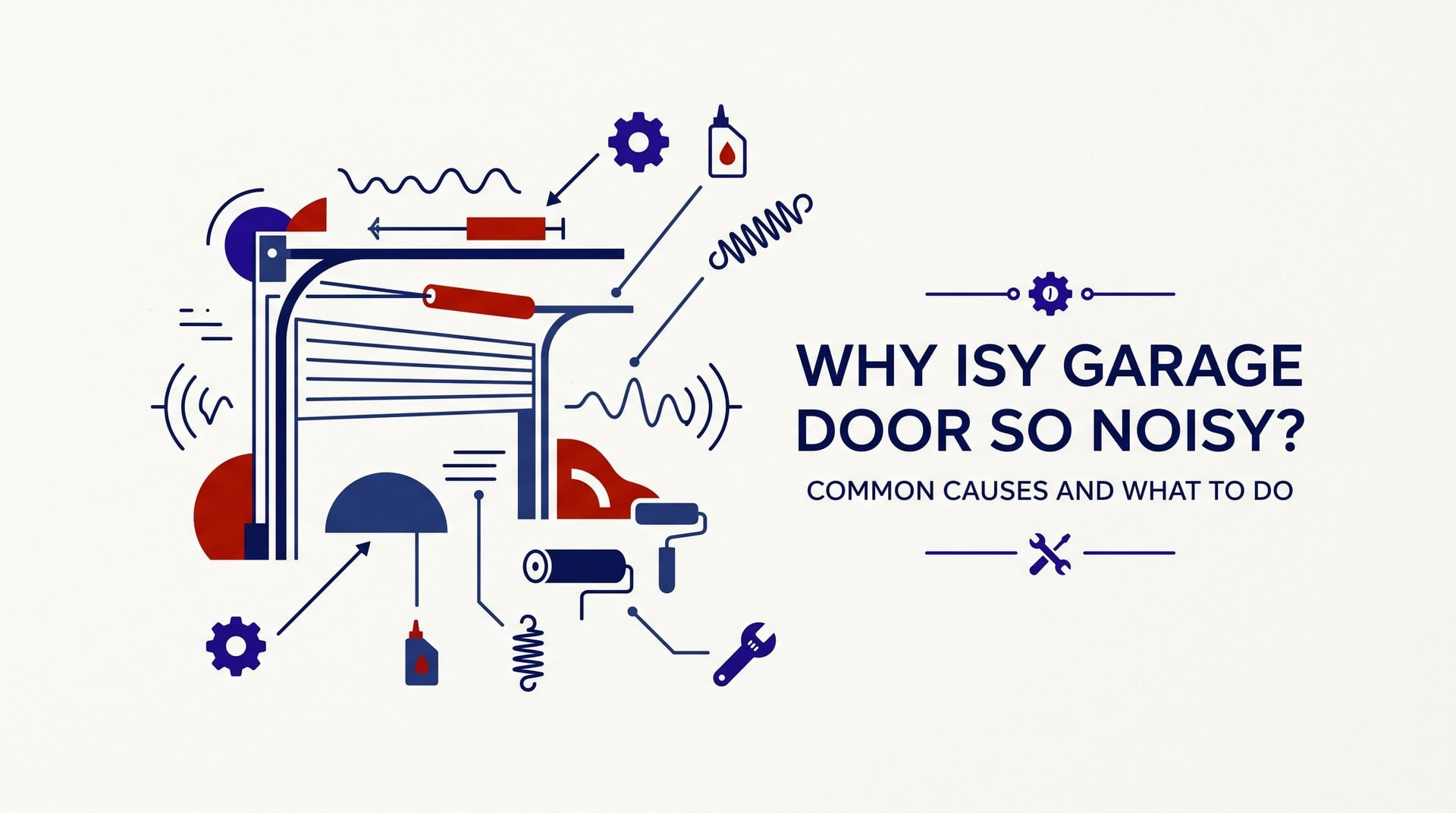
It’s 7 a.m., you’re already running late, and you hit the button to open your garage. What follows sounds less like a door opening and more like a metal trash can rolling down a flight of stairs. Sound familiar? A noisy garage door is one of the most common complaints we hear from homeowners across Western New York, and it tends to get worse after a long Buffalo winter.
The good news is that noise isn’t always a sign of something serious. Sometimes it’s a quick fix you can handle yourself. Other times it’s a warning that something needs attention before it turns into a bigger, more expensive problem. The key is knowing what kind of noise you’re dealing with.
What Kind of Noise Is It Making?
Different sounds point to different problems. Getting familiar with what you’re hearing makes it a lot easier to describe the issue when you call for service, and it helps you figure out whether it’s something minor or something that needs immediate attention.
Grinding: Usually points to worn rollers or stripped gears in your opener. This one doesn’t get better on its own.
Squeaking: Typically means dry hinges, rollers, or tracks that haven’t been lubricated in a while. Often the easiest fix on the list.
Banging or a loud pop: This is the one to take seriously. It often signals a broken spring or a loose panel. If you hear a sudden bang, stop using the door and call a pro.
Rattling: Usually loose hardware, such as bolts, nuts, or brackets that have vibrated loose from daily use. Annoying, but typically a straightforward fix.
The Most Common Culprits
Once you’ve identified the type of noise, the cause usually falls into one of three categories.
Worn or Damaged Rollers
Rollers are the small wheels that guide your door along the track. Steel rollers are common in older doors and tend to be noisier, especially as they wear down. They’re also more prone to rust in wet climates like ours. Nylon rollers are quieter and hold up better through freeze-thaw cycles. Swapping out steel rollers for nylon is one of the most affordable noise fixes a technician can make, and homeowners are often surprised at the difference. If you’re unsure which type is right for your door, our guide to choosing garage door rollers breaks down the options in detail.
Dry Hinges, Springs, and Tracks
Metal components need lubrication to move smoothly. Over time, especially after a cold winter, hinges and tracks dry out and start to squeak and grind. A lot of homeowners reach for WD-40, which seems like the obvious choice, but WD-40 is actually a solvent. It can strip away existing lubrication and leave components drier than before. Use a proper garage door lubricant or white lithium grease instead.
Loose Hardware
Your garage door opens and closes hundreds of times a year. All that movement gradually loosens the bolts, nuts, and brackets holding everything together. When hardware gets loose, it vibrates and rattles. A quick pass with a socket wrench is often all it takes to quiet things down. For a full checklist of what to inspect, see our essential garage door maintenance tips for homeowners.
How Western New York Weather Makes Things Worse
If you’ve noticed your garage door getting louder in late winter or early spring, you’re not imagining it. Cold temperatures cause metal to contract, which tightens up the movement of rollers and hinges and creates more friction. Springs that were fine in October can start groaning by February. Learn more about how Buffalo weather affects your garage door year-round.
The freeze-thaw cycles we get around Buffalo and Tonawanda are particularly hard on springs and tracks. Moisture gets into small gaps, freezes, expands, and accelerates rust. That rust creates friction, and friction creates noise. It’s a pattern we see every year across Western New York.
Seasonal noise spikes are common and don’t always mean something is broken. But they are a signal that your door is working harder than it should, and that’s worth addressing before a worn component fails completely. Our post on checking your garage door after a Buffalo winter storm covers exactly what to look for.
Things You Can Try at Home
Before calling for service, there are a few things worth checking yourself.
Tighten the hardware: Grab a socket wrench and work your way along the track and door panels, snugging up any bolts or nuts that have worked themselves loose. Don’t overtighten, just firm them up.
Lubricate the moving parts: Apply garage door lubricant or white lithium grease to the hinges, rollers, and springs. Avoid the tracks themselves, as lubricating tracks can actually cause the door to slip. A little goes a long way. For a full seasonal approach, our seasonal garage door maintenance tips walk you through the process step by step.
Check the opener chain or belt: If your opener has a chain drive, a loose chain will slap and rattle loudly during operation. There’s usually an adjustment on the opener unit itself. Belt drives are quieter by design, so if you have one and it’s still noisy, the issue is likely elsewhere in the door.
When to Stop DIYing and Call Someone
Some noises are a clear sign to put the tools down.
A loud bang or sudden pop almost always means a broken spring. Torsion springs are under enormous tension and are genuinely dangerous to handle without proper training and tools. If you suspect a broken spring, stop using the door and call a professional. Homeowners in Lancaster and Amherst can reach us quickly for same-day service.
Grinding that continues after lubrication usually means the rollers or opener gears are worn past the point of a simple fix. Ignoring it can lead to the door coming off track, which turns a minor repair into a much more expensive one. If you’re weighing whether to repair or replace, our guide on when to repair vs. replace a garage door in Buffalo can help you decide.
Quick Answers to Common Questions
Is a noisy garage door actually dangerous?
It depends on the sound. Squeaking and rattling are usually minor. Banging, popping, or grinding that doesn’t improve with lubrication warrants a closer look from a technician.
How often should I lubricate my garage door?
Once or twice a year is a good baseline. In a climate like ours, leaning toward twice a year, once in fall and once in spring, makes sense.
Can I fix a noisy garage door myself?
Minor issues like loose hardware and dry hinges, yes. Anything involving springs or cables should be left to a professional.
Still Noisy? We’re Happy to Take a Look
If you’ve tightened the hardware, lubricated the moving parts, and it’s still making noise, that’s your cue to have someone come out and take a look. Catching a worn roller or a stressed spring early is almost always cheaper than dealing with the aftermath of a door that’s come off track or dropped unexpectedly.
716 Garage Door Repair serves homeowners across Buffalo, Tonawanda, and the surrounding Western New York area. We’re locally owned, we give you straight answers, and we price things honestly. No runaround, no upselling you on things you don’t need. Scheduling online is easy!


























 Tap to Call: (716) 608-0053