

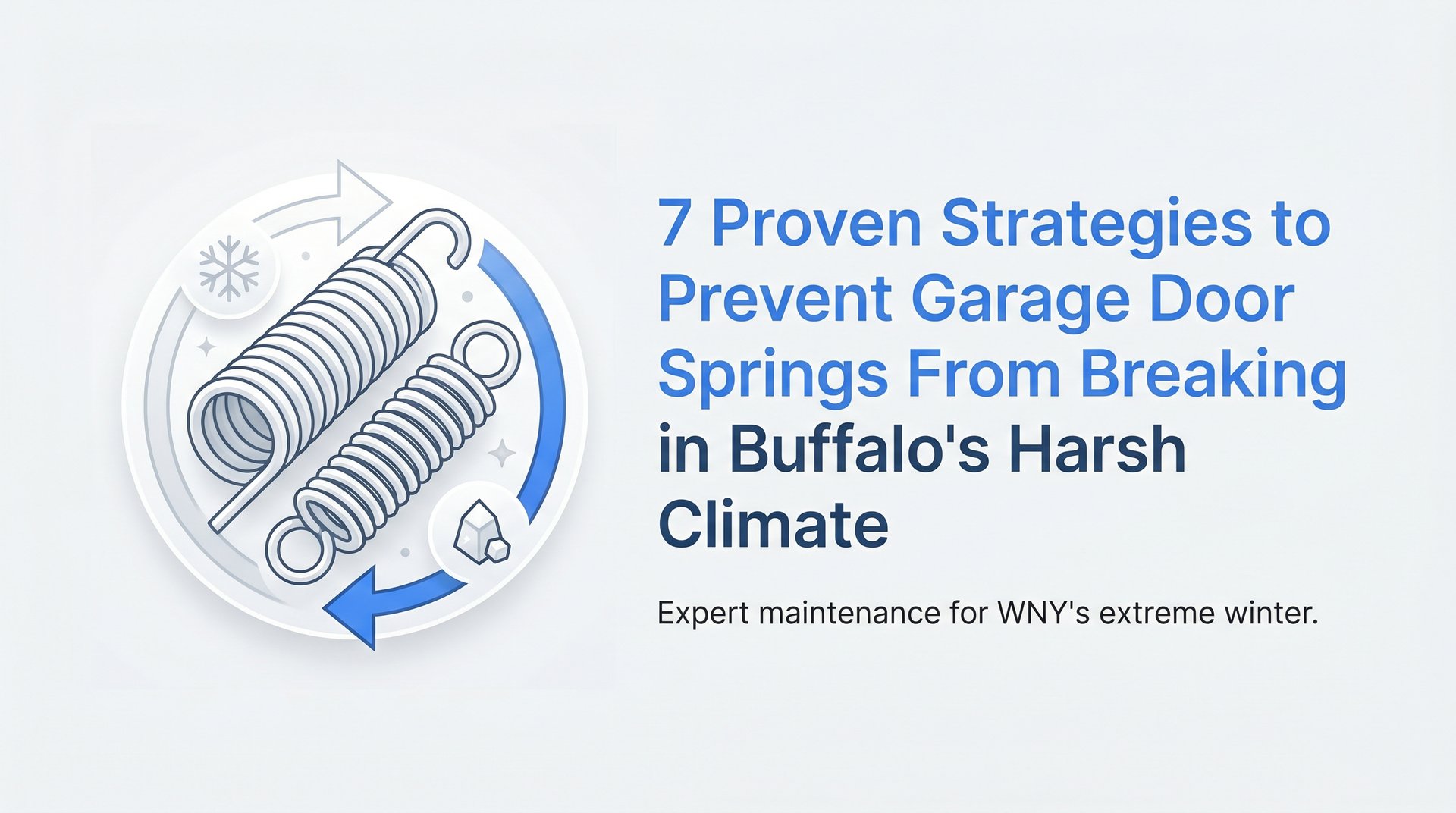
Buffalo‘s extreme weather—with dramatic temperature swings, lake-effect moisture, and corrosive road salt—puts exceptional stress on garage door components, causing springs to fail at the worst possible times. This guide reveals seven proven maintenance strategies specifically designed for Western New York‘s harsh climate to help you prevent garage door springs from breaking in Buffalo, saving you from emergency repairs during peak winter months when contractors are overwhelmed and your car is trapped in the garage.
Picture this: It’s 6:30 AM on a January morning in Buffalo, you’re already running late, and you hit the garage door opener only to hear that sickening *snap* of a broken spring. Your car’s trapped, snow is piling up, and you’re scrambling to find emergency repair service during peak season when everyone else’s springs are failing too. Sound familiar? If you’ve lived in Western New York long enough, you’ve either experienced this nightmare yourself or know someone who has.
Here’s the thing about Buffalo’s climate—it’s absolutely brutal on garage door springs. We’re not just talking cold weather here. We’re dealing with temperature swings from 50 degrees down to single digits in the span of a day, lake-effect moisture that creeps into everything, and road salt that corrodes metal faster than you’d think possible. Your garage door springs contract and expand with these temperature changes, weakening the metal little by little until one frigid morning, they give up entirely.
But here’s what most Buffalo homeowners don’t realize: regular maintenance will maximize the life of your garage door springs.
With the right maintenance approach tailored specifically for our harsh Western New York conditions, you can dramatically extend the life of your springs and avoid those expensive emergency calls. We’re talking practical strategies that don’t require a mechanical engineering degree or a massive budget—just consistent attention and a bit of proactive care. Whether you’re dealing with torsion springs mounted above your door or extension springs along the tracks, these seven proven strategies will help you stay ahead of Buffalo’s weather instead of becoming its next victim.
1. Schedule Seasonal Lubrication Before Temperature Drops
The Challenge It Solves
When temperatures plummet below freezing, unlubricated metal springs become stiff and brittle. The natural oils and any existing lubricant thicken or evaporate, creating increased friction between spring coils. This forces your garage door opener to work harder, puts additional strain on the springs themselves, and accelerates metal fatigue. In Buffalo’s climate, where we can experience weeks of sub-zero wind chills, this friction becomes a spring killer. The metal contracts in the cold, coils bind against each other, and what should be smooth operation turns into a grinding, stress-inducing mess.
The Strategy Explained
Proper lubrication creates a protective barrier between spring coils, reducing friction and helping the metal maintain flexibility even in extreme cold. But timing matters enormously. You want to lubricate before Buffalo’s first hard freeze—typically late October or early November—so the lubricant can properly coat the springs before cold weather sets in. Use a silicone-based garage door lubricant specifically designed for cold weather applications. These formulations won’t thicken or gum up in freezing temperatures like standard oils will.
The key is thorough coverage without overdoing it. You’re looking for a light, even coating along the entire length of each spring, not dripping globs that attract dust and debris. Focus on the springs themselves, but don’t forget the other moving parts—hinges, rollers, and the opener’s chain or belt also benefit from proper lubrication for garage door health before winter hits.
Implementation Steps
1. Clean springs with a dry cloth to remove any accumulated dust, debris, or old lubricant that has hardened or attracted grime.
2. Apply garage door lubricant in a sweeping motion along the entire length of each spring, rotating the spring slightly as you go to ensure even coverage on all sides.
3. Manually open and close the door several times to work the lubricant into the coils and distribute it evenly throughout the spring’s movement range.
Pro Tips
Mark your calendar for late October every year and make this a non-negotiable pre-winter ritual, like switching to snow tires. If you’ve already missed the window and winter has arrived, you can still lubricate—just pick a day when temperatures are above freezing so the lubricant flows properly. Avoid WD-40 or general-purpose oils; they’re not designed for the job and can actually attract more dirt than they prevent.
2. Balance Your Door Before Winter Arrives
The Challenge It Solves
An imbalanced garage door forces one spring to carry more weight than the other, creating uneven wear that dramatically shortens spring life. Think of it like driving with misaligned wheels—one tire wears out way faster than it should. During Buffalo winters, when you’re opening and closing your garage more frequently to avoid scraping ice off your windshield in the driveway, this imbalance gets magnified. The overworked spring is cycling under stress every single time, weakening faster with each use. Eventually, it snaps, often taking the other spring with it shortly after since they were installed at the same time.
The Strategy Explained
Door balance refers to how evenly the weight of your garage door is distributed across the spring system. A properly balanced door should stay in place when you manually lift it halfway and let go—it shouldn’t slam down or shoot upward. If it does either, your springs aren’t properly adjusted, and one is working harder than it should. Testing and correcting balance before winter ensures both springs share the load equally, which is especially important during our coldest months when metal is already stressed from temperature-related contraction.
This isn’t just about extending spring life, either. An imbalanced door puts extra strain on your opener motor, can cause the door to operate unevenly (creating gaps that let cold air in), and increases the risk of the door coming off its tracks during operation. Understanding common garage door problems and how to fix them helps you identify balance issues early.
Implementation Steps
1. Disconnect your garage door opener by pulling the red emergency release handle, allowing you to operate the door manually for testing.
2. Lift the door to approximately waist height and carefully release it, observing whether it stays in place, rises, or falls.
3. If the door doesn’t stay put, contact a garage door professional to adjust the spring tension—this is not a DIY job, as spring adjustment involves dangerous tension that can cause serious injury.
Pro Tips
Test your door balance twice a year—once before winter and once in spring. If you notice your door becoming harder to lift manually or if your opener struggles more than usual, these are red flags that balance has shifted. Never attempt to adjust spring tension yourself unless you’ve been professionally trained; the springs hold hundreds of pounds of tension and can cause severe injury if released improperly.
3. Upgrade to High-Cycle Springs for Buffalo Conditions
The Challenge It Solves
Standard residential garage door springs are typically rated for around 10,000 cycles—one cycle being a complete open-and-close sequence. For most homeowners in moderate climates, this translates to roughly seven to ten years of service. But Buffalo isn’t a moderate climate. Our extreme temperature fluctuations cause springs to expand and contract more dramatically and more frequently than in milder regions. This thermal stress effectively ages the metal faster, meaning your “10,000-cycle” springs might only deliver 7,000 or 8,000 cycles before failure. Add in the increased usage during winter months when nobody wants to manually open a frozen garage door, and you’re looking at premature spring failure becoming almost inevitable.
The Strategy Explained
High-cycle springs rated for 25,000 cycles or more are manufactured from higher-grade steel wire with tighter tolerances and better metallurgy. They’re designed to withstand more stress cycles before metal fatigue sets in. While they cost more upfront—typically 30-50% more than standard springs—they can last two to three times longer, especially in demanding climates like ours. Learn more about why high cycle garage door springs for Buffalo homeowners make financial sense in the long run.
These upgraded springs also tend to perform more consistently throughout their lifespan. Standard springs gradually lose tension over time, meaning your door becomes harder to lift manually as the springs age. High-cycle springs maintain their tension characteristics longer, giving you smoother, more reliable operation for more years.
Implementation Steps
1. When your current springs fail or during a planned replacement, specifically request high-cycle springs rated for at least 25,000 cycles from your garage door professional.
2. Ask about the wire gauge and coating options—powder-coated or galvanized springs offer additional protection against the moisture and salt exposure common in Buffalo garages.
3. Have both springs replaced at the same time even if only one has failed, as springs installed together will have similar wear patterns and the second will likely fail soon after the first.
Pro Tips
Don’t wait for a spring failure to upgrade. If your current springs are approaching five years old and you’re planning to stay in your home for several more years, consider proactive replacement with high-cycle springs during off-season when service calls are cheaper and scheduling is easier. Ask your technician to mark the installation date on the springs with a permanent marker—it’s a simple way to track age and plan future maintenance.
4. Maintain Consistent Garage Temperature When Possible
The Challenge It Solves
Rapid temperature swings are murder on metal springs. When your garage goes from 40 degrees during the day to -5 degrees overnight—a common occurrence during Buffalo winters—the spring metal contracts and expands repeatedly. This thermal cycling creates microscopic stress fractures in the metal that accumulate over time until the spring eventually fails. The problem gets worse when you park a warm car in a cold garage, creating localized temperature variations that cause uneven expansion and contraction within the same spring. It’s like repeatedly bending a paperclip back and forth; eventually, the metal fatigues and snaps.
The Strategy Explained
You can’t control Buffalo’s weather, but you can moderate the temperature extremes inside your garage. Insulating your garage door and walls, sealing gaps around the door perimeter, and weatherstripping the bottom seal all help maintain a more stable internal temperature. This doesn’t mean heating your garage to room temperature—that’s expensive and unnecessary. The goal is simply reducing the temperature range your springs experience. If you can keep your garage 10-15 degrees warmer than outside temperatures, you’ll significantly reduce thermal stress on the springs.
Even small improvements make a difference here. A well-insulated garage door can moderate temperature swings by 10-20 degrees compared to an uninsulated door, and that’s enough to meaningfully extend spring life. Choosing the best garage door materials for Buffalo’s climate plays a crucial role in temperature regulation.
Implementation Steps
1. Install or upgrade garage door insulation using foam board panels or reflective insulation designed specifically for garage doors—this also helps with energy efficiency if your garage shares a wall with living space.
2. Replace worn weatherstripping along the sides and top of your garage door opening, and install or replace the bottom seal to prevent cold air infiltration from ground level.
3. Seal any gaps or cracks in garage walls, particularly around windows, electrical outlets, and where the garage connects to your house, using expanding foam or caulk appropriate for exterior applications.
Pro Tips
If you’re in the market for a new garage door anyway, consider an insulated model with a high R-value rating. The upfront cost difference pays for itself through extended spring life and reduced energy costs if you have a heated workspace or living area above the garage. For existing doors, adhesive-backed insulation kits are available at most home improvement stores and can be installed in an afternoon.
5. Inspect Hardware Monthly During Winter Months
The Challenge It Solves
Spring failures rarely happen without warning—there are almost always visible signs of impending failure if you know what to look for. The problem is that most homeowners never actually look at their garage door springs until something goes wrong. By the time you hear unusual noises or notice operation problems, the spring is often in critical condition and could fail at any moment. During Buffalo winters, when springs are under maximum stress from cold temperatures and frequent use, catching early warning signs becomes even more important. A small gap forming between spring coils or minor rust development can progress to complete failure within weeks when temperatures are bouncing between freezing and thawing.
The Strategy Explained
Regular visual inspections let you spot problems while they’re still manageable, before you’re dealing with an emergency situation during a snowstorm. You’re looking for specific indicators of spring fatigue: gaps between coils that weren’t there before, rust or corrosion on the spring surface, visible stretching where the spring appears longer than its mate, or any coating damage that exposes bare metal. You’ll also want to listen during operation for new sounds—squeaking, grinding, or popping noises often indicate spring problems developing. Following winter garage door maintenance tips for Buffalo homeowners helps you stay on top of these inspections.
The beauty of this strategy is that it costs nothing but five minutes of your time, yet it can save you from the expense and inconvenience of an emergency spring replacement.
Implementation Steps
1. With the door closed, visually examine both springs for gaps between coils, rust spots, or any areas where the protective coating appears damaged or worn through to bare metal.
2. Operate the door and listen carefully for any unusual sounds—squealing, popping, or grinding noises that weren’t present during previous operations.
3. Compare both springs visually for any obvious differences in appearance, length, or the spacing between coils—springs should look essentially identical if they’re wearing evenly.
Pro Tips
Take a photo of your springs when they’re new or in good condition, then compare monthly inspection observations to that baseline image. It’s much easier to spot gradual changes when you have a reference point. If you notice any concerning changes, don’t wait—contact a professional for evaluation before the spring fails completely. Weekend and evening emergency calls cost significantly more than scheduled service appointments.
6. Address Salt and Moisture Damage Promptly
The Challenge It Solves
Road salt is everywhere in Buffalo during winter—on our cars, our shoes, tracked into our garages on a daily basis. That salt doesn’t just disappear when it melts; it creates a corrosive brine that attacks metal components, including your garage door springs. Salt accelerates rust formation, and rust weakens spring metal by creating pitting and surface degradation. Combine this with the moisture from melting snow on your vehicle and you’ve created the perfect environment for corrosion. What makes this particularly insidious is that the damage happens gradually and often isn’t visible until it’s advanced. By the time you see obvious rust on your springs, corrosion has likely already compromised the metal’s structural integrity.
The Strategy Explained
Proactive salt and moisture management means regularly cleaning salt residue from your garage floor and any surfaces where it accumulates, and protecting your spring hardware from exposure. This doesn’t require elaborate procedures—simple cleaning with plain water is often enough to remove salt before it causes damage. For the springs themselves, maintaining proper lubrication (as covered in Strategy 1) creates a protective barrier against moisture and salt exposure. If you notice any rust forming on springs or other hardware, addressing it immediately prevents the corrosion from spreading and weakening the metal further.
The key here is consistency. Cleaning up salt once in January won’t help if you ignore it for the rest of winter. Regular attention keeps corrosion from gaining a foothold. Understanding how Buffalo weather is brutal on your garage door reinforces why this maintenance matters.
Implementation Steps
1. Sweep or hose down your garage floor weekly during winter months to remove salt tracked in from vehicles, paying special attention to areas directly under the garage door springs.
2. If you notice salt residue on springs or mounting hardware, wipe it off with a damp cloth and immediately dry the area thoroughly to prevent moisture from sitting on the metal.
3. Apply a light coating of lubricant to any areas where you’ve removed salt buildup, ensuring the protective barrier is restored before the next exposure.
Pro Tips
Consider placing absorbent mats in your garage where you typically park—they’ll catch a lot of the salt-laden slush dripping off your vehicle before it spreads across the floor. If you spot rust forming on springs, don’t panic immediately; surface rust can sometimes be cleaned off with fine steel wool and then protected with lubricant. But if you see pitting or flaking rust, that’s a sign of deeper corrosion and you should have a professional evaluate the spring’s remaining safe lifespan.
7. Schedule Professional Maintenance Before Peak Season
The Challenge It Solves
DIY maintenance covers a lot of ground, but there are aspects of garage door spring care that require professional expertise and specialized tools. Spring tension adjustment, for instance, is genuinely dangerous for untrained individuals—those springs hold hundreds of pounds of force. Professional technicians can also spot subtle problems that aren’t obvious to homeowners, like bearing wear, shaft misalignment, or cable fraying that can contribute to premature spring failure. The biggest challenge, though, is timing. If you wait until your springs fail to call a professional, you’re dealing with an emergency situation during peak demand season, when every other Buffalo homeowner is also calling for service because their springs failed in the cold.
The Strategy Explained
Scheduling professional maintenance in late summer or early fall—before Buffalo’s winter rush begins—gives you several advantages. Service calls are easier to schedule, pricing is typically lower than emergency rates, and technicians have more time to thoroughly inspect and address any issues they find. A comprehensive professional inspection includes spring tension testing, balance adjustment, hardware examination, safety feature testing, and lubrication of components that are difficult to access yourself. Review our seasonal garage door maintenance tips to understand what a thorough inspection covers.
Think of this as preventive healthcare for your garage door. An annual checkup catches problems before they become emergencies.
Implementation Steps
1. Contact a local garage door service company in August or September to schedule a comprehensive maintenance inspection before winter demand increases.
2. Ask the technician to specifically evaluate spring condition and remaining lifespan, along with testing door balance and safety features like auto-reverse sensors.
3. If the inspection reveals springs that are showing significant wear, discuss proactive replacement options and pricing rather than waiting for emergency failure during peak season.
Pro Tips
Establish a relationship with a reputable local garage door company rather than calling whoever has the cheapest ad when you have an emergency. Companies that know your system and maintenance history provide better service and can often fit you in faster when you do need urgent repairs. Ask about maintenance plans or service agreements—some companies offer annual inspection packages at reduced rates, which can be worthwhile if you want to ensure you don’t forget this important seasonal task. If you need help after hours, know that 24/7 emergency garage door repair is available.
Putting It All Together
Look, protecting your garage door springs from Buffalo’s relentless winter assault doesn’t require a mechanical engineering degree or a massive budget. What it requires is consistent attention and a willingness to be proactive instead of reactive. Start with the low-hanging fruit: lubricate those springs before the first hard freeze, test your door balance, and commit to monthly visual inspections during the cold months. These three strategies alone will catch most problems before they become expensive emergencies.
For longer-term protection, think about the investments that pay dividends over years rather than months. When your current springs do eventually need replacement—and they will, that’s just physics—upgrade to high-cycle springs designed for our demanding climate. Improve your garage insulation to moderate temperature swings. Clean up salt and moisture regularly instead of letting corrosion gain a foothold.
And here’s the thing about warning signs: they’re only useful if you actually heed them. If you notice unusual sounds during operation, visible gaps forming in spring coils, difficulty lifting your door manually, or rust developing on spring surfaces, don’t convince yourself it can wait until spring. It can’t. Buffalo winters don’t get easier as the season progresses, and a spring showing warning signs in December isn’t going to magically recover by February. It’s going to fail, probably at the worst possible moment.
The smart move? Contact a professional who understands Buffalo’s unique climate challenges and can evaluate your system before you’re dealing with an emergency. Someone who can tell you honestly whether your springs have another season left in them or if you’re pushing your luck. Someone who can schedule a planned replacement during normal business hours instead of charging you emergency rates on a Sunday morning when it’s snowing sideways.
Your garage door springs are working hard every single day, fighting against temperature extremes that would make springs in Phoenix or Atlanta laugh. Give them the maintenance they need to do their job, pay attention to the warning signs they give you, and you’ll avoid joining the crowd of Buffalo homeowners standing in their driveways in subzero temperatures, waiting for emergency service because they ignored the squeaking sound for three months.
Ready to get ahead of spring problems instead of reacting to them? Learn more about our services and schedule your pre-winter inspection before the rush begins. Your future self—the one who’s not stranded in a cold garage on a January morning—will thank you.






























 Tap to Call: (716) 608-0053