

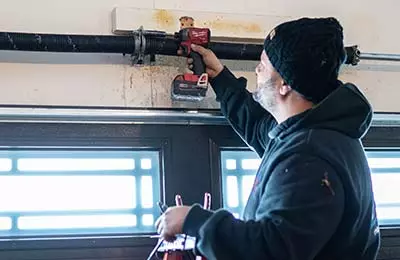

Understanding the Importance of Garage Door Springs
Garage door springs play a critical role in the daily operation of a garage door. They counterbalance the weight of the door, allowing it to open and close smoothly with minimal effort. In residential properties throughout North Tonawanda, garage doors are often used multiple times per day, making spring performance essential for convenience, safety, and long-term reliability.
When a spring begins to wear out or breaks entirely, the garage door may become extremely heavy, uneven, or impossible to operate. This is why spring repair is considered one of the most important aspects of garage door maintenance. For homeowners who rely on dependable access to their garage, professional spring repair services help restore normal operation while preventing additional damage to the door system.
Types of Garage Door Springs Commonly Used
Most residential garage doors use one of two spring systems: torsion springs or extension springs. Each type functions differently and requires specialized knowledge during repair or replacement.
Torsion Springs
Torsion springs are mounted horizontally above the garage door opening. They work by twisting and storing mechanical energy as the door closes, then releasing that energy to lift the door as it opens. Torsion springs are known for their durability, smoother operation, and balanced lifting power. Many newer homes in North Tonawanda are equipped with this system.
Extension Springs
Extension springs are typically installed along the sides of the garage door tracks. They stretch and contract as the door moves. While effective, extension springs tend to wear out faster and can create uneven door movement if one side fails before the other.
Understanding which system is installed is essential when diagnosing problems and performing accurate repairs.
Signs Your Garage Door Spring Needs Repair
Garage door springs rarely fail without warning. Homeowners often notice subtle changes before a complete breakdown occurs. Recognizing these signs early can help prevent sudden failure and potential safety risks.
Common indicators include:
- The garage door feels significantly heavier than usual
- The door opens unevenly or tilts to one side
- Loud snapping or popping noises during operation
- The garage door opens only a few inches and stops
- Visible gaps or separation in the spring coils
When any of these symptoms appear, prompt spring repair becomes essential to protect the door, opener, and surrounding hardware.
Causes of Garage Door Spring Failure
Garage door springs are designed to withstand thousands of open-and-close cycles, but they are not permanent components. Several factors contribute to spring wear and eventual failure.
Normal Wear and Tear
Each time the garage door operates, the springs complete one cycle. Over time, repeated use weakens the metal, eventually causing it to lose tension or snap.
Temperature Fluctuations
In regions like North Tonawanda, seasonal temperature changes can accelerate metal fatigue. Cold weather causes springs to contract and become brittle, increasing the likelihood of breakage.
Improper Maintenance
Lack of lubrication, misalignment, or imbalance within the garage door system places additional stress on the springs. Routine inspections and maintenance can significantly extend spring lifespan.
Schedule Your Free Estimate
Get a free estimate on your garage door project today!









 Tap to Call