
Your garage door cycles over a thousand times yearly, yet most homeowners neglect it until costly repairs become necessary. This guide shares seven proven garage door maintenance strategies that extend your door’s lifespan, prevent expensive breakdowns, and keep your family safe—whether you’re battling harsh winters or everyday wear and tear.
Your garage door is the largest moving part of your home, cycling up and down over a thousand times each year. Yet most homeowners forget about it until something goes wrong—and by then, a simple fix has often turned into an expensive repair. The good news? A little preventive maintenance goes a long way. Regular garage door maintenance not only extends the life of your door and opener but also keeps your family safe and your energy bills in check. Whether you’re dealing with Buffalo’s brutal winters or just everyday wear and tear, these seven proven maintenance strategies will help you avoid breakdowns, catch small problems before they escalate, and keep your garage door operating smoothly for years to come.
Think of garage door maintenance like changing the oil in your car—skip it, and you’re asking for trouble. But unlike your vehicle, your garage door doesn’t have a dashboard light to warn you when something’s off. That’s why establishing a simple maintenance routine is so important. You don’t need fancy tools or technical expertise to keep your door in great shape. Most of these strategies take just a few minutes and can save you hundreds or even thousands of dollars down the road.
Let’s dive into the seven essential maintenance practices that’ll keep your garage door running like new.
1. Perform Monthly Visual and Sound Inspections
The Challenge It Solves
Most garage door problems don’t happen overnight—they develop gradually. A small crack in a roller, a slightly loose bolt, or a fraying cable can quickly turn into a complete system failure if left unchecked. The challenge is that homeowners typically only notice their garage door when it stops working entirely. By then, what could have been a quick fix has become an emergency repair that costs significantly more and leaves you without access to your garage.
The Strategy Explained
Monthly inspections are your first line of defense against costly repairs. This isn’t about becoming a garage door expert—it’s about developing an eye for the obvious warning signs. Once a month, take five minutes to watch and listen to your door as it operates through a complete cycle. Look for symmetrical movement as the door rises and falls. Listen for grinding, scraping, or squealing sounds that weren’t there before. Check for visible wear on springs, cables, rollers, and hinges. You’re not trying to diagnose complex mechanical issues; you’re simply catching the obvious stuff before it gets worse.
Pay special attention after extreme weather. Buffalo winters are particularly tough on garage doors, with temperature swings causing metal components to contract and expand. Ice buildup can stress the opener, and cold temperatures make lubricants less effective. Learning how to check your garage door after a Buffalo winter storm can help you identify weather-related damage early.
Implementation Steps
1. Watch the door operate from inside the garage with good lighting, noting any jerky movements, hesitation, or uneven lifting on either side.
2. Listen carefully for new or unusual sounds like grinding metal, squealing rollers, or rattling hardware that might indicate loose components.
3. Visually inspect springs for gaps or separation in the coils, check cables for fraying, examine rollers for cracks, and look at hinges for excessive wear or rust.
4. Test the door’s balance by disconnecting the opener and manually lifting the door halfway—it should stay in place without assistance if properly balanced.
Pro Tips
Take a short video of your door operating when it’s working perfectly. This gives you a baseline to compare against when you suspect something’s off. Keep a simple maintenance log on your phone noting the date of each inspection and any observations. Small changes over time often reveal developing problems that aren’t obvious month to month.
2. Keep Moving Parts Properly Lubricated
The Challenge It Solves
Friction is the enemy of any mechanical system. Your garage door has numerous moving parts that rub against each other thousands of times per year. Without proper lubrication, this constant friction accelerates wear, creates annoying squeaks and grinding sounds, and forces your opener to work harder than necessary. In cold climates like Buffalo, inadequate lubrication becomes even more problematic as temperatures drop and standard lubricants thicken or lose effectiveness.
The Strategy Explained
Proper lubrication is one of the simplest yet most impactful maintenance tasks you can perform. The right lubricant reduces friction between moving parts, prevents rust and corrosion, and helps components operate smoothly even in temperature extremes. But here’s what many homeowners get wrong: they either use the wrong products or apply them to the wrong places. WD-40, for instance, is a solvent and degreaser—not a lubricant. You need a silicone-based or lithium-based spray specifically designed for garage doors.
Focus your lubrication efforts on hinges, rollers (the bearings inside, not the tracks), springs, and the top of the chain or screw drive on your opener. These are the components that experience the most friction and benefit most from regular lubrication. Understanding the importance of lubrication for garage door health will help you maintain smooth operation year-round.
Implementation Steps
1. Clean all moving parts with a dry cloth or soft brush to remove dirt and old lubricant that can trap debris and cause grinding.
2. Apply silicone-based or lithium-based garage door lubricant to all hinges, roller bearings (not the tracks themselves), torsion springs, and bearing plates.
3. Lubricate the chain or screw drive on your opener according to manufacturer specifications, typically applying lubricant to the top of the rail.
4. Operate the door several times to distribute the lubricant evenly across all moving surfaces, then wipe away any excess that might drip.
Pro Tips
Schedule your lubrication sessions with the changing seasons—once when you switch to daylight saving time in spring, and once when you switch back in fall. This simple memory trick ensures you never forget. In Buffalo’s harsh winters, consider using a cold-weather specific lubricant that maintains viscosity in freezing temperatures.
3. Test and Maintain Safety Features Regularly
The Challenge It Solves
Modern garage doors can weigh several hundred pounds and exert tremendous force when closing. Without properly functioning safety features, your garage door becomes a serious hazard to children, pets, and anyone who might be in the wrong place at the wrong time. Safety sensors and auto-reverse mechanisms are designed to prevent injuries and property damage, but they only work if they’re properly maintained and tested. Many homeowners assume these features are working fine until a dangerous situation reveals otherwise.
The Strategy Explained
Your garage door has two primary safety systems that require regular testing. The auto-reverse mechanism, mandated since 1993, should cause the door to reverse direction if it encounters resistance while closing. The photo-eye sensors, positioned near the floor on each side of the door opening, create an invisible beam that stops and reverses the door if anything breaks the beam. Both systems can malfunction due to misalignment, dirty sensors, or electrical issues. Testing these features monthly takes less than two minutes but could prevent a tragedy.
Beyond testing, maintenance includes keeping sensor lenses clean and ensuring they remain properly aligned. Dust, spider webs, or even water spots on the sensor lenses can cause false readings. If you’re experiencing issues, our guide on fixing garage door sensor problems walks you through common troubleshooting steps.
Implementation Steps
1. Test the auto-reverse by placing a solid object like a 2×4 board flat on the ground in the door’s path—the door should immediately reverse upon contact.
2. Test the photo-eye sensors by closing the door and waving your hand through the sensor beam—the door should stop and reverse instantly.
3. Clean both sensor lenses with a soft cloth to remove dust, cobwebs, or moisture that might interfere with the beam.
4. Check sensor alignment by verifying that the indicator lights on both sensors are solid (not blinking), which confirms they’re properly aimed at each other.
Pro Tips
If your sensors frequently go out of alignment, check for loose mounting brackets or vibration from the door’s operation. Sometimes a small piece of foam weather stripping between the sensor mount and the wall can absorb vibration and keep sensors stable. Never bypass or disable safety features to get a door to close—that’s a lawsuit waiting to happen.
4. Inspect and Replace Weatherstripping Before It Fails
The Challenge It Solves
The weatherstripping around your garage door is your first defense against Buffalo’s brutal winters, summer heat, rain, pests, and debris. When this seal deteriorates—which it inevitably does—you’re literally throwing money out the door. Gaps in weatherstripping allow conditioned air to escape, force your HVAC system to work harder, and create entry points for water, snow, rodents, and insects. Most homeowners don’t think about weatherstripping until they notice puddles inside the garage or feel a cold draft, by which point they’ve already wasted energy for months.
The Strategy Explained
Weatherstripping degrades from constant exposure to temperature extremes, UV radiation, and physical wear from the door’s operation. The bottom seal takes the most abuse, scraping against the concrete floor with every cycle while also bearing the brunt of weather exposure. Side and top seals typically last longer but still require regular inspection. Catching weatherstripping problems early means you can replace sections before complete failure, maintaining your garage’s energy efficiency year-round.
Quality weatherstripping should be flexible, free of cracks or tears, and create a complete seal when the door is closed. Choosing the best garage door materials for Buffalo’s climate includes selecting weatherstripping that can handle our extreme temperature swings.
Implementation Steps
1. Inspect all weatherstripping with the door closed, looking for visible gaps, cracks, brittleness, or sections that have pulled away from their mounting channels.
2. Check the bottom seal specifically for flat spots, tears, or areas where the rubber has hardened and no longer creates a flexible seal against the floor.
3. Test the seal by closing the door on a sunny day and looking for light coming through—any visible light indicates gaps that need attention.
4. Replace damaged weatherstripping immediately using the correct profile for your door, ensuring proper insertion into mounting channels and even contact across the entire length.
Pro Tips
Consider upgrading to EPDM rubber weatherstripping if you’re still using vinyl—it handles temperature extremes better and lasts significantly longer. When installing new bottom seals, adjust the height so the seal compresses slightly when the door closes, creating a tight seal without causing excessive friction that could strain your opener.
5. Keep Tracks Clean and Properly Aligned
The Challenge It Solves
Your garage door travels on metal tracks that guide its movement up, down, and along the ceiling. When these tracks accumulate dirt, debris, or become misaligned, the door can’t operate smoothly. You’ll notice the door binding, making scraping sounds, or moving unevenly. Severe misalignment can cause the door to jam completely or even come off the tracks—a dangerous situation that requires professional repair. The challenge is that track problems develop gradually, so homeowners often don’t notice until the issue becomes serious.
The Strategy Explained
Track maintenance involves two distinct tasks: keeping the tracks clean and ensuring they remain properly aligned. Clean tracks allow rollers to move freely without obstruction. Proper alignment ensures the door travels straight without binding or placing uneven stress on one side. Most track issues start small—a bit of accumulated grime here, a slightly bent section there—but compound over time until the door’s operation becomes noticeably compromised.
Here’s what you need to understand: the tracks themselves should never be lubricated. That’s a common mistake. Lubricating tracks actually attracts dirt and creates a gummy buildup that impedes roller movement. When selecting replacement components, our guide on choosing the best garage door rollers can help you pick the right ones for your system.
Implementation Steps
1. Clean the inside of both tracks using a damp cloth or brush to remove dirt, debris, and any old lubricant buildup that might be causing friction.
2. Check track alignment by measuring the distance from the track to the door frame at multiple points—measurements should be consistent on both sides.
3. Look for dents, bends, or damaged sections of track that might catch rollers or prevent smooth operation, noting any areas that need professional attention.
4. Verify that all track mounting brackets are securely fastened to the wall or ceiling, tightening any loose bolts that could allow movement or misalignment.
Pro Tips
If you notice the door binding in one spot consistently, place a level against the track at that point to check for alignment issues. Small adjustments to mounting brackets can often resolve minor alignment problems, but significant bends or damage require professional repair. Never attempt to straighten severely bent tracks yourself—improper repairs can create safety hazards.
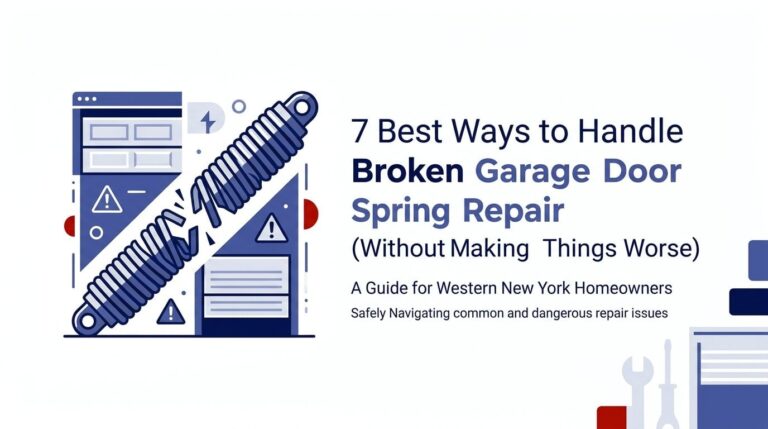
6. Monitor Springs and Cables (But Don’t Touch Them)
The Challenge It Solves
Springs and cables are the muscle of your garage door system, bearing the entire weight of the door and making it possible for your opener to function. They’re also the most dangerous components to work on and the most likely to fail catastrophically. Torsion springs are under extreme tension—when they break, they can cause serious injury or property damage. Cables can fray and snap unexpectedly. The challenge for homeowners is knowing how to monitor these critical components for wear without attempting repairs that should only be performed by trained professionals.
The Strategy Explained
Springs have a finite lifespan, typically lasting for a certain number of cycles before they weaken and eventually break. For most households, this translates to roughly seven to ten years of service. Cables can last longer but are subject to fraying, especially near attachment points where stress is highest. Your role as a homeowner is to watch for warning signs that these components are nearing the end of their useful life, then call a professional before failure occurs.
Visual inspection from a safe distance is your best tool. Look for gaps in spring coils, rust or corrosion on springs, or visible fraying on cables. Consider upgrading to high-cycle garage door springs when replacement time comes—they last significantly longer and provide better value for Buffalo homeowners.
Implementation Steps
1. Visually inspect torsion springs above the door for gaps between coils, rust, or any visible separation that indicates the spring is stretching and weakening.
2. Examine lift cables on both sides of the door for fraying, especially near the bottom brackets and at the cable drums where stress is concentrated.
3. Test door balance monthly by disconnecting the opener and manually lifting the door—it should lift smoothly and stay put at any point, indicating proper spring tension.
4. Schedule professional spring replacement at the first sign of wear rather than waiting for failure, which always happens at the worst possible time.
Pro Tips
Never attempt to adjust, repair, or replace torsion springs yourself—the tension involved can cause severe injury or death. Extension springs (the kind that run along the side tracks) are somewhat safer but still require professional handling. When one spring breaks, replace both springs at the same time since they’ve experienced the same wear and the other will likely fail soon after.
7. Schedule Annual Professional Tune-Ups
The Challenge It Solves
Even the most diligent homeowner lacks the specialized knowledge, tools, and experience to identify every potential problem with a garage door system. Some issues simply aren’t visible or detectable without professional equipment and expertise. Worn bearings inside your opener, subtle spring tension imbalances, or electrical issues with safety sensors might not be obvious until they cause a complete failure. Professional tune-ups catch these hidden problems before they leave you with a non-functioning door and an emergency repair bill.
The Strategy Explained
Annual professional maintenance is like getting a physical from your doctor—it’s preventive care that identifies problems before symptoms appear. A qualified technician performs a comprehensive inspection that goes far beyond what homeowners can safely accomplish. They’ll test spring tension precisely, adjust the opener’s force settings, verify all safety features are functioning correctly, and identify wear patterns that indicate future problems. They can also perform high-risk tasks like spring adjustments and cable tensioning that homeowners should never attempt.
Professional tune-ups typically include lubrication, hardware tightening, track alignment, safety testing, and adjustments to ensure optimal performance. Many manufacturers require annual professional service to maintain warranty coverage, making these tune-ups not just good practice but potentially necessary for warranty protection. Understanding common garage door problems and how to fix them helps you communicate effectively with your technician about any concerns.
Implementation Steps
1. Schedule your annual tune-up during the spring or fall when technicians are less busy with emergency calls and can spend adequate time on thorough inspection.
2. Choose a locally owned company with trained technicians, proper licensing, and transparent pricing rather than the cheapest option you find online.
3. Ask the technician to explain any issues they find and provide recommendations for repairs versus replacements based on the component’s remaining useful life.
4. Keep records of all professional service, including what was inspected, adjusted, or replaced—this documentation helps track your door’s maintenance history and can be valuable for warranty claims.
Pro Tips
Many garage door companies offer maintenance plans that include annual tune-ups plus priority service and discounts on repairs. These plans often pay for themselves if you need even one repair during the year. Don’t wait until something breaks to establish a relationship with a reliable garage door company—having a trusted professional you can call when problems arise is invaluable.
Putting Your Maintenance Plan Into Action
Here’s the bottom line: garage door maintenance isn’t complicated, but it does require consistency. The seven strategies we’ve covered form a comprehensive maintenance program that addresses every critical aspect of your garage door system. Some tasks you’ll perform monthly, others twice a year, and professional service happens annually. Together, these practices dramatically extend the life of your door, prevent most emergency repairs, and keep your family safe.
Start with the quick wins. This month, perform a visual and sound inspection, test your safety features, and lubricate the moving parts. These three tasks take less than twenty minutes combined but immediately improve your door’s operation and safety. Then schedule your annual professional tune-up so you have that baseline inspection completed. Once you’ve knocked out these initial tasks, the ongoing maintenance becomes simple routine.
The investment of time and attention you put into garage door maintenance pays dividends in multiple ways—fewer breakdowns, lower energy bills, extended component life, and peace of mind knowing your door is safe and reliable. Buffalo’s weather is tough enough on your home without neglecting the maintenance that keeps everything working properly.
At 716 Garage Door Repair, we’re locally owned and operated with friendly technicians who genuinely care about keeping your garage door in top condition. Whether you need help establishing a maintenance routine, want to schedule your annual tune-up, or have noticed something that doesn’t seem quite right, we’re here with transparent pricing and excellent service.
If your garage door needs maintenance or an annual tune-up, call (716) 608-0053 now or schedule an appointment online. We help Buffalo area homeowners avoid costly repairs through proper maintenance and timely professional care. Your garage door works hard for you every single day—give it the attention it deserves!
























 Tap to Call: (716) 608-0053