
There’s a particular kind of dread that comes with a garage door that’s gone off track. Maybe you heard a loud bang and walked out to find the door hanging at a weird angle. Maybe it just stopped halfway up and started grinding. Or maybe you clipped it backing out and now it won’t move at all. Whatever happened, you’re standing there wondering how bad this actually is — and what you’re supposed to do next.
Here’s the short answer: an off-track door means one or more rollers have slipped out of the track channels that guide the door as it opens and closes. The door can’t move properly, it may be visibly crooked, and in some cases it’s holding itself up by not much more than friction and luck.
The good news is that off-track repairs are among the most common calls we get across Western New York, from Buffalo to Lockport to Rochester. This is a fixable problem. But how you handle the next few minutes and hours matters a lot. The wrong moves can turn a straightforward repair into a much more expensive one.
This article walks through the best options for garage door off-track repair, in the order that actually makes sense — starting with what to do right now and ending with how to keep it from happening again.
1. Stop Using the Door Immediately
The Challenge It Solves
When a door comes off track, the instinct for a lot of homeowners is to try forcing it back into position or hitting the opener button a few more times to see if it’ll sort itself out. That instinct will cost you money.
The Strategy Explained
An off-track door is already under uneven stress. Every time you try to operate it, you risk bending the track further, snapping a cable, cracking a panel, or causing the door to drop suddenly. None of those outcomes are good, and some of them are genuinely dangerous.
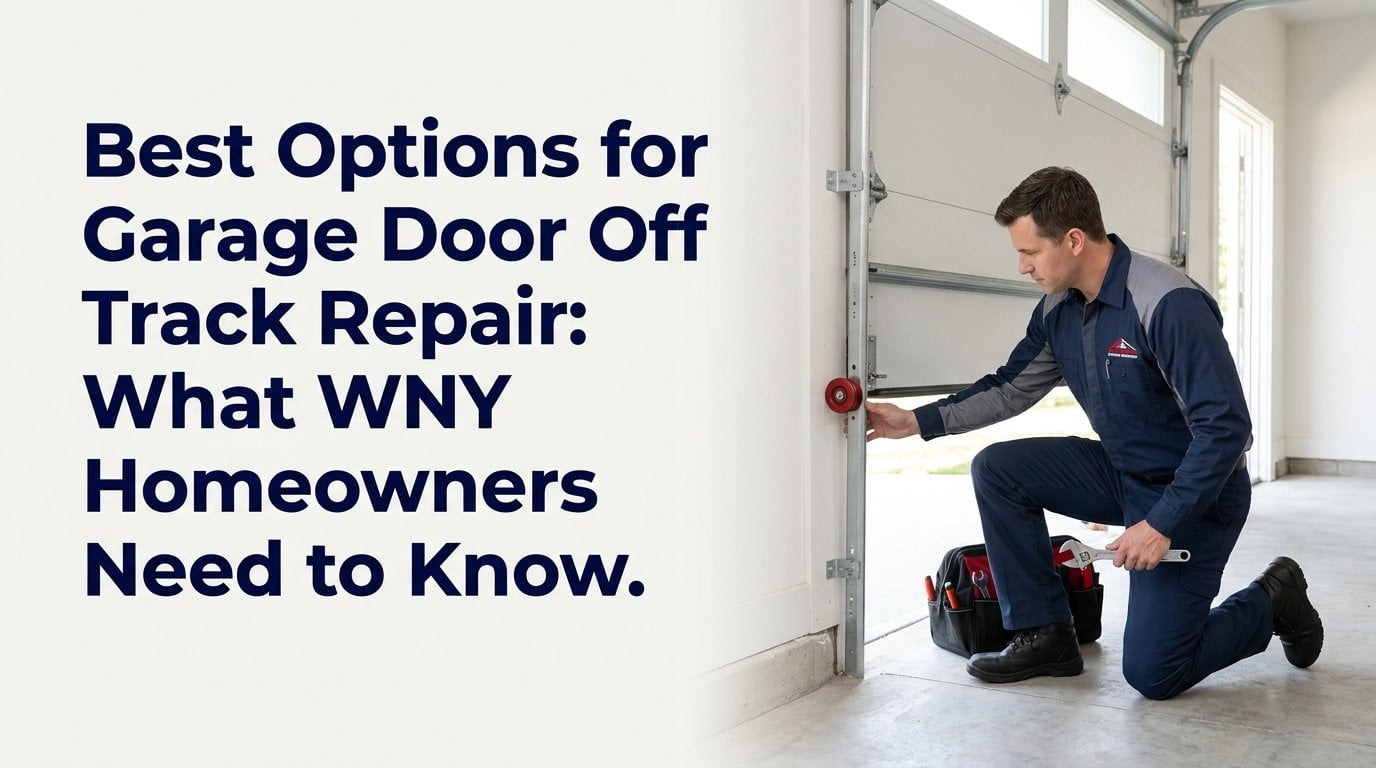
The first thing to do is disconnect the automatic opener. Most openers have a red emergency release cord hanging from the carriage. Pull it to disengage the door from the drive mechanism. This prevents the opener from trying to force the door and making things worse.
After that, leave the door where it is. If it’s partially open, don’t try to manually push it up or pull it down. A door that’s off track is unpredictable, and without the counterbalance system working correctly, it can be much heavier than you expect.
Implementation Steps
1. Pull the red emergency release cord on your opener to disconnect the drive.
2. Do not attempt to manually move the door up or down.
3. If the door is partially open and you need to secure the garage, prop it carefully with a piece of lumber — but don’t rely on this long-term.
4. Call a technician before doing anything else.
Pro Tips
If the door is fully closed and the garage is otherwise secure, there’s no rush to open it again before a technician arrives. A door that stays put is safer than one that’s been wrestled with. Patience here saves you from a bigger repair bill.
2. Understand What Actually Caused It
The Challenge It Solves
Walking into a repair conversation without any context puts you at a disadvantage. Knowing the likely cause of your off-track door helps you ask better questions, understand what the technician finds, and make smarter decisions about the repair.
The Strategy Explained
Off-track doors don’t happen randomly. There’s almost always a root cause, and identifying it matters because the fix depends on it. Physical impact is one of the most common culprits technicians see — a vehicle bumping the door, even lightly, can knock a roller out of the track channel. Worn or broken rollers are another frequent cause; rollers have a lifespan and eventually degrade, especially on doors that see heavy daily use.
Bent or misaligned tracks can develop gradually from impact or improper installation. A broken lift cable changes how weight is distributed across the door and can yank it sideways. A broken spring has a similar effect — when the counterbalance system fails, the door doesn’t move evenly.
For homeowners across Western New York, there’s one more cause worth knowing about: ice. During Buffalo winters, water can pool inside track channels, freeze overnight, and physically force rollers out of position by morning. This is a genuinely common local issue that doesn’t get talked about enough.
Implementation Steps
1. Think back to what happened just before the door went off track — any impact, unusual noise, or weather event.
2. Look (without touching) for obvious signs: a visibly bent track, a dangling cable, or a roller sitting outside the channel.
3. Note whether the door is crooked on one side or both — this gives the technician useful information.
Pro Tips
Even if you can’t identify the cause, describing what you heard or noticed before the problem started is genuinely helpful to a technician. “It made a loud bang and then stopped” tells a different story than “it’s been grinding for a week and finally gave out.”
3. Know When It’s a DIY Fix vs. When to Call a Pro
The Challenge It Solves
Some homeowners want to know if they can handle this themselves. It’s a fair question, and the honest answer is: sometimes, but less often than you’d think.
The Strategy Explained
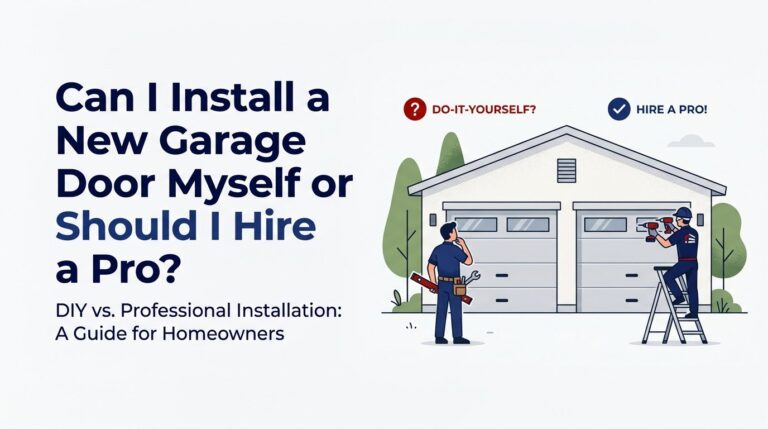
If you have a lightweight single-car door, the roller has simply slipped out of the track with no cable or spring involvement, and you’re comfortable working carefully around a heavy object — re-seating that roller is sometimes something a handy homeowner can manage. It involves opening the track slightly with pliers, guiding the roller back in, and closing the track back up.
But here’s the reality: most off-track situations involve the door’s counterbalance system in some way. Torsion springs store a significant amount of mechanical energy. Cables are under high tension. Working on either without proper training and tools is genuinely dangerous — not “be careful” dangerous, but “serious injury” dangerous. This isn’t a scare tactic; it’s the consistent position of garage door professionals across the industry.
If there’s any spring or cable involvement, or if the track itself is bent, call a professional. The repair cost is almost always less than the cost of an ER visit or a door that’s damaged further by a repair attempt gone wrong.
Implementation Steps
1. Assess whether the door is a single-car lightweight door or a heavier double-car door.
2. Look for any sign of cable or spring damage before assuming it’s a simple roller issue.
3. If you see a dangling cable, a coiled spring that looks wrong, or the door is significantly crooked, stop and call a technician.
Pro Tips
When in doubt, call. A technician can often give you a quick phone assessment based on what you describe, and most off-track repairs are straightforward enough that the service visit is worth it for the peace of mind alone.
4. Track Realignment — The Most Common Repair
The Challenge It Solves
Once the door is safely stopped and the cause is identified, the actual repair can begin. For many off-track situations, track realignment is the core of the fix — and understanding what it involves helps set realistic expectations.
The Strategy Explained
Track realignment means loosening the mounting hardware that holds the track to the wall, repositioning the track to its correct alignment, and re-tightening everything securely. The track needs to be at the right angle and distance from the door frame for the rollers to move smoothly through the full range of motion.
During this repair, a good technician will also inspect the rollers, hinges, and other hardware — because misaligned tracks and worn rollers often go hand in hand. It doesn’t make sense to realign a track and leave a roller that’s about to fail.
One important distinction: if the track is bent rather than just misaligned, realignment isn’t enough. A bent track needs to be replaced. Trying to bend it back into shape rarely works long-term and can create weak points that fail again quickly. Replacement track is not an expensive part, and it’s the right call when the damage warrants it.
Implementation Steps
1. A technician will inspect the full track system — both vertical and horizontal sections — before starting work.
2. Mounting hardware is loosened, the track is repositioned to the correct alignment, and hardware is re-tightened.
3. The door is tested through several cycles to confirm smooth movement before the job is complete.
Pro Tips
Ask the technician whether the track is being realigned or replaced, and why. A straightforward answer to that question is a good sign you’re working with someone who’s being transparent about what your door actually needs.
5. Roller Replacement as Part of the Fix
The Challenge It Solves
Worn or broken rollers are one of the most frequent root causes of an off-track door. Addressing the track without addressing the rollers means the problem is likely to come back.
The Strategy Explained
Rollers are the small wheels that ride inside the track channel as the door moves. They have a lifespan — typically several years under normal use, though WNY’s freeze-thaw cycles and heavy winters can shorten that. When a roller wears down, cracks, or loses its bearing, it doesn’t ride smoothly anymore and can pop out of the track under load.
There are two main types: steel rollers and nylon rollers. Steel rollers are durable but tend to be noisier and can be harder on tracks over time. Nylon rollers run quieter and don’t need lubrication as frequently, which makes them a popular upgrade for homeowners who want a smoother, lower-maintenance door.
Here’s something worth knowing: replacing just the one roller that failed often isn’t the right long-term solution. If one roller has worn out, the others on the door are likely at a similar point in their lifespan. Replacing them as a set makes more sense than replacing them one at a time over the next couple of years.
Implementation Steps
1. Ask the technician to inspect all rollers during the repair, not just the one that caused the issue.
2. Discuss roller type — nylon vs. steel — based on your priorities for noise and maintenance.
3. If multiple rollers are worn, replace them as a set rather than individually.
Pro Tips
Rollers are a relatively inexpensive part of a garage door system. If you’re already paying for a service visit, it’s usually worth addressing all the rollers at once rather than having a technician back out in six months for the next one that fails.
6. Addressing Cable or Spring Issues That Contributed
The Challenge It Solves
Sometimes the rollers and track are fine — the real problem is a snapped cable or broken spring that caused the door to go off track in the first place. Fixing the track without addressing this means the door won’t work correctly, and it may come off track again immediately.
The Strategy Explained
Lift cables run from the bottom corners of the door up to the drum at the top of the system. When one snaps, the door loses support on that side and can shift sideways, pulling rollers out of the track. A broken torsion or extension spring has a similar effect — the counterbalance system fails, the door becomes extremely heavy on one side, and it doesn’t move evenly.
This is the category of repair that absolutely requires a professional. Torsion springs in particular store significant mechanical energy even when the door is in the down position. Handling them without proper training and the right tools is one of the more dangerous things a homeowner can attempt in a home repair context.
When you schedule a service visit for an off-track door, a technician will check the cables and springs as part of the assessment. If either contributed to the problem, they’ll explain what needs to be replaced and why before starting work.
Implementation Steps
1. Do not attempt to inspect or adjust cables or springs yourself.
2. When calling for service, mention if you heard a loud bang — this often indicates a spring or cable failure.
3. Expect the technician to assess the full system before quoting the repair.
Pro Tips
A snapped cable or broken spring isn’t a sign that your whole door needs replacing — it’s a normal wear item that gets repaired or replaced as part of routine service. Most homeowners are surprised by how straightforward the fix is once a professional handles it.
7. Prevention: Keeping Your Door on Track Long-Term
The Challenge It Solves
The best off-track repair is the one you never need. A few simple habits go a long way toward keeping your door running smoothly through Western New York’s demanding winters and the rest of the year.
The Strategy Explained
Seasonal lubrication is the single most effective maintenance habit for garage doors in this region. Before winter sets in, lubricate the rollers, hinges, and track with a product designed for garage doors — not WD-40, which can actually strip existing lubrication. This reduces friction, protects metal components from moisture, and helps prevent the kind of wear that leads to rollers failing.
Keep the tracks clear of debris and ice. During freeze-thaw periods, water can pool inside the track channel and freeze overnight. A quick check after an ice storm can catch this before it forces a roller out of position. If you notice ice in the tracks, clear it carefully before operating the door.
Pay attention to early warning signs: grinding, scraping, hesitation when the door changes direction, or a door that seems louder than it used to be. These are the sounds of a system that’s working harder than it should. Catching them early and scheduling a maintenance visit is almost always cheaper than waiting for a failure.
Implementation Steps
1. Lubricate rollers, hinges, and tracks before winter — typically October or November in WNY.
2. Check tracks for ice or debris after significant weather events.
3. Schedule a professional inspection periodically to catch wear before it becomes a failure.
4. Don’t ignore grinding or hesitation — address it before it becomes an off-track situation.
Pro Tips
If your garage is unheated or poorly insulated, your door is working in more extreme temperature swings than most. That’s worth keeping in mind when setting a maintenance schedule — more frequent lubrication and inspection makes sense in those conditions.
Getting Your Door Back on Track
An off-track garage door is stressful in the moment, but it’s one of the most common repairs we handle across Western New York — and in most cases, it’s a straightforward fix when approached the right way. The key is stopping the door immediately, understanding what caused the problem, and getting the right repair done rather than a partial one.
Whether you’re dealing with a roller that slipped out, a track that needs realignment, or a cable that snapped during a cold snap, the approach is the same: don’t force it, don’t guess, and work with someone who’ll give you a straight answer about what your door actually needs.
At 716 Garage Door Repair, we serve homeowners and businesses throughout Buffalo, Lockport, Rochester, and the broader Western New York area. We’re locally owned, and we show up with transparent pricing and no pressure to buy things you don’t need. Our technicians will tell you exactly what they found and what it takes to fix it — and then get it done right.
If your door has come off track, give us a call or reach out online. Scheduling online is easy! We’ll get your door moving safely again.






























 Tap to Call: (716) 608-0053