
Broken or bent garage door tracks are among the most common issues facing Western New York homeowners, especially after harsh Buffalo winters. This guide covers the best garage door repair options for broken tracks, helping you understand what’s fixable as a DIY project and when a professional technician is the safer, smarter call.
You hit the button, the door groans, shudders, and stops halfway. Or maybe it scrapes along one side and won’t close all the way. If this sounds familiar, a broken or bent track is often the culprit. It’s one of the most common garage door problems we see across Western New York, and Buffalo winters make it even more likely. The good news: this is fixable. Before you call anyone, here’s what you should know.
Why Garage Door Tracks Break in the First Place
Tracks take a lot of abuse over the years, and a few specific things tend to push them past their limit.
Impact damage: Bumping the track with your car bumper or a ladder is more common than most homeowners admit. Even a minor hit can bend a vertical track section enough to throw the whole system off.
Worn rollers: When rollers get old and start wobbling, they put uneven pressure on the track. Over time, that stress can cause the track to shift or deform at the mounting points. Choosing the right garage door rollers from the start can significantly reduce this kind of wear.
Freeze-thaw cycles: This one is specific to our climate. Buffalo winters are hard on metal hardware. Repeated freezing and thawing causes metal to contract and expand, which gradually loosens mounting brackets and can physically shift the track out of alignment. Ice buildup can even force a door off its track entirely.
Signs something is wrong with your tracks include a door that wobbles or scrapes on one side, a door that jumps or derails, or a door that opens partway and stops. Don’t ignore these. A misaligned track puts extra strain on your cables, springs, and opener, turning a simple repair into a much bigger one.
Your Repair Options: What’s Actually Involved
Not every track problem requires the same fix. Here’s a breakdown of the main repair options:
Track realignment: This is the most common repair. If the track has shifted slightly out of position or a mounting bracket has come loose, a technician can loosen the hardware, reposition the track, and re-secure it. No parts replacement needed.
Track section replacement: If a section is crushed, cracked, or bent beyond what can be straightened, that section needs to come out and get replaced. This is common after impact damage or severe weather.
Full track system replacement: This is less common, but necessary when multiple sections are damaged or when the track gauge doesn’t match the door properly. It’s also the right call when an older track system is just worn out overall.
Most homeowners aren’t sure whether they need a small repair or a full replacement, which is a completely reasonable concern. If you’re weighing your options, our guide on when to repair vs. replace a garage door can help clarify the decision. A good technician will walk you through exactly what they’re seeing before any work begins.
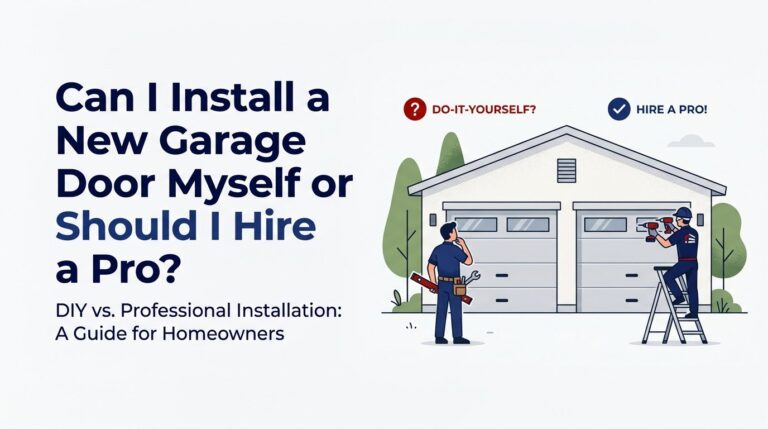
Can You Fix a Broken Track Yourself?
Sometimes, yes. But it depends on the situation.
If the track has shifted slightly and the door is still on its rollers, minor realignment can be a DIY task. Loosen the mounting bolts, gently tap the track back into position with a rubber mallet, and retighten. That’s about the extent of what’s safe to tackle on your own.
Here’s where it gets important: if the door has come completely off the track, or if you can see that the springs or cables are involved in any way, stop. Garage door springs are under significant tension. A door that’s derailed puts that tension in an unpredictable state, and attempting to force it back into position without the right tools and training is genuinely dangerous. For situations where the door has fully derailed, professional garage door off-track repair is the safe path forward.
In the meantime, disengage the opener using the red emergency release cord and leave the door where it is. Don’t try to force it open or closed. Wait for a professional to assess it.
What a Professional Track Repair Actually Looks Like
When a technician from 716 Garage Door Repair shows up, they’re not just looking at the obvious damage. A proper track repair includes:
Full system inspection: Rollers, cables, springs, and mounting hardware all get checked. Track problems often come with secondary issues that are easy to miss.
Same-day repair: Most track repairs are completed in a single visit. Technicians typically carry common replacement parts, so you’re not waiting on a parts order for a standard repair. Homeowners in Buffalo and Tonawanda can typically expect fast response times.
Transparent pricing: Before any work starts, you should get a clear explanation of what’s damaged and what it will cost. No surprises.
Common Questions About Broken Tracks
How much does track repair cost?
It depends on the extent of the damage and what parts are needed. A simple realignment costs less than a full section replacement. A technician can give you an accurate quote after assessing the damage in person.
Is a bent track an emergency?
It can be, especially if the door is stuck open in winter. A door that won’t close is a security and heat-loss problem. Same-day emergency service is often available for situations like this.
How long does a track repair take?
Most repairs are done in under two hours. Simple realignments can be even faster.
Keeping Your Tracks in Good Shape Year-Round
A little maintenance goes a long way, especially in Western New York’s climate. Homeowners in Western New York deal with some of the harshest conditions for garage door hardware in the region.
Lubricate seasonally: Apply a garage door-specific lubricant to the tracks and rollers before winter hits. Cold temperatures thicken standard lubricants and increase friction. Our winter garage door maintenance tips cover exactly what products and schedules work best in this climate.
Check for gaps: Periodically look at where the rollers sit in the track. A visible gap between the roller and the track wall is an early sign of misalignment.
Annual maintenance: Scheduling a yearly tune-up is the easiest way to catch small alignment issues before they turn into broken tracks and bigger repair bills. Our essential garage door maintenance tips are a great starting point for building a simple routine.
Putting It All Together
Broken tracks are one of the most common calls we get across Western New York, from Buffalo to Tonawanda and everywhere in between. If your door is acting up, don’t force it. Disengage the opener and reach out to 716 Garage Door Repair for a same-day assessment. Scheduling online is easy!






























 Tap to Call: (716) 608-0053