
It’s 7 a.m. on a January morning in Buffalo. You’re already running late, you hit the garage door opener, and instead of a smooth lift, you get a grinding groan and a door that lurches halfway up before stopping. Sound familiar? Most homeowners brush these moments off and keep moving. But that groan? It’s your door trying to tell you something.
The truth is, garage doors rarely fail without warning. They give you signs weeks or even months before they quit entirely. Catching those signs early is almost always cheaper, safer, and less stressful than dealing with a door that won’t open on a February morning when the temperature is in the single digits.
It’s Trying to Tell You Something
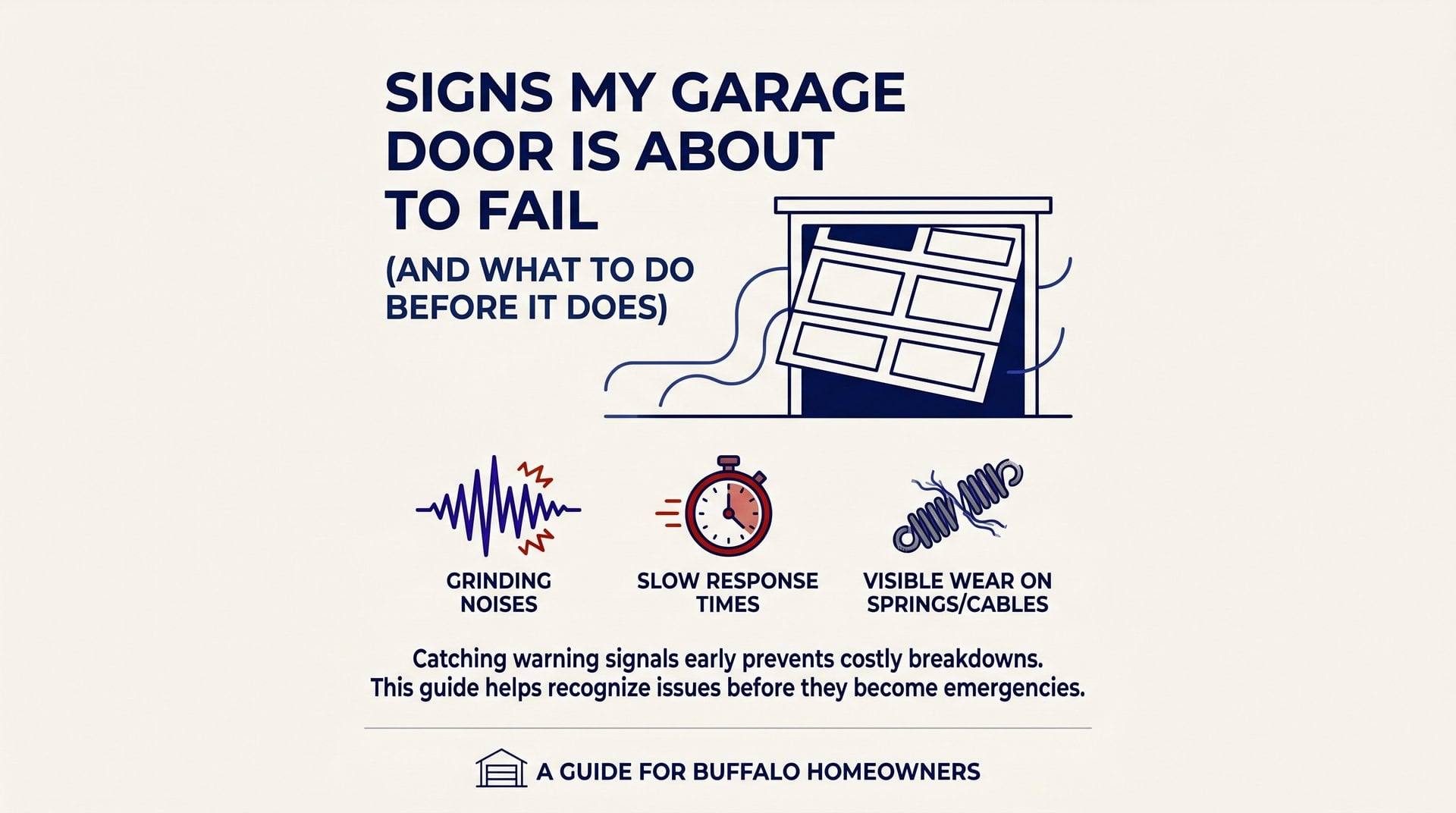
Your ears are one of the best diagnostic tools you have. A garage door that’s working properly should move with a relatively smooth, consistent sound. When you start hearing grinding, scraping, or loud popping, something is wearing out.
Grinding or scraping: Usually points to worn rollers or debris in the track. Left alone, this puts extra strain on the opener motor and can cause the track to bend over time. Choosing the right garage door rollers can make a significant difference in how quietly and smoothly your door operates.
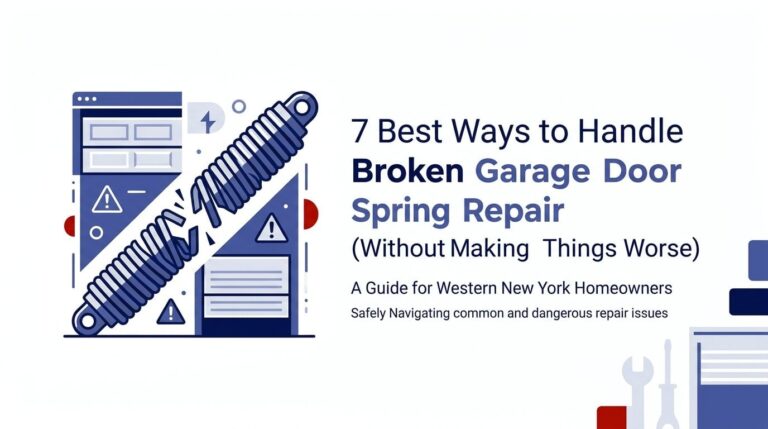
Loud popping or banging: Often a sign that the springs are struggling. A sudden loud bang usually means a spring has snapped entirely.
Slow or uneven movement: If one side of the door rises faster than the other, or the whole door moves sluggishly, that’s a mechanical issue. It’s not just a slow opener. It typically means spring tension is off or a cable is starting to fray.
Unexpected reversals are another red flag. If the door starts closing and then reverses for no obvious reason, the safety sensors may be misaligned, or there may be a spring tension problem causing the opener to sense resistance that isn’t there.
Warning Signs You Can See With Your Eyes
You don’t need to be a technician to spot visible damage. A quick visual check every few months can catch problems before they become serious.
Cables and Springs
Look at the lift cables running along the sides of the door. If you see fraying, kinking, or slack in the cable, that’s a problem. A snapped cable is a safety hazard and will leave the door unable to open properly, or worse, cause it to fall.
Check the torsion spring above the door (the horizontal spring mounted to the metal bar). If you see a visible gap in the coil, rust, or the spring looks stretched and uneven, it’s likely near the end of its life. Understanding high-cycle garage door springs can help you make a smarter decision when it’s time for replacement.
Panels and Seals
Warped, cracked, or separating panels are common in Western New York, where winters are hard on exterior materials. Wood doors are especially vulnerable to moisture damage. If panels are pulling away from the frame or you can see daylight around the edges, the door’s structural integrity is compromised. In severe cases, broken garage door panels need to be replaced promptly to restore both function and security.
Don’t overlook the bottom seal and weather stripping along the sides. If they’re cracked, shredded, or missing sections, cold air, water, and pests are getting in, and the door has likely been neglected for a while.
The Balance Test Every Homeowner Should Know
This is a simple test that takes about two minutes and tells you a lot about the health of your door’s springs.
Start by disconnecting your opener. There’s usually a red cord hanging from the trolley on the rail. Pull it to switch to manual mode. Then lift the door by hand to about waist height, roughly halfway up, and let go.
A properly balanced door will stay in place. It might drift slightly, but it should hold its position without you holding it.
If the door drops to the ground or shoots upward, the spring tension is off. That imbalance puts serious strain on the opener motor every time the door cycles, and it’s a sign the springs need professional adjustment or replacement. Homeowners in Tonawanda dealing with this issue should schedule a professional inspection before the problem worsens.
This test is safe to do yourself. The repair is not. Torsion springs are under significant stored tension, and attempting to adjust or replace them without proper training and tools has caused serious injuries. This is one job where calling a professional is the right call every time.
When Western New York Weather Speeds Up the Damage
Buffalo’s winters are hard on everything, and garage doors are no exception. The repeated freeze-thaw cycles that run from November through March cause metal components to contract and expand constantly. That stress accelerates wear on springs, cables, and hinges faster than you’d see in a milder climate. Reviewing winter garage door maintenance tips before the cold season hits can help you stay ahead of these issues.
Road salt and driveway salt get tracked into the garage and settle on the floor near the door. Over time, that moisture and salt combination corrodes the bottom of the springs and cables, weakening them from the inside out.
Wood and composite panels absorb moisture during wet weather and then contract in the cold. Over several winters, this causes warping, cracking, and paint failure. Older doors in neighborhoods around Buffalo and Tonawanda often show this kind of cumulative damage. Choosing the best garage door materials for Buffalo’s climate can dramatically extend the life of your door.
Here’s the thing about cold weather failures: a door that worked fine all summer can suddenly stop functioning in January. The cold isn’t usually the root cause. It’s the final stressor on parts that were already worn down. Which is exactly why a fall inspection matters.
Quick Checklist: Red Flags to Watch For
Unusual noises: Grinding, scraping, loud popping, or banging during operation.
Slow or uneven movement: One side rising faster than the other, or the door moving sluggishly overall.
Unexpected reversals: Door won’t stay closed or reverses mid-cycle without obstruction.
Visible cable damage: Fraying, slack, or kinking in the lift cables.
Spring issues: Visible gap in the torsion spring coil, rust, or uneven appearance.
Panel damage: Warped, cracked, or separating panels, especially after a hard winter.
Failed balance test: Door drops or rises when released at the halfway point.
Old springs: Torsion springs typically last 7 to 10 years with average use. If yours are older and you’ve never had them serviced, they’re overdue for inspection. Homeowners across Western New York can benefit from a professional spring maintenance check to avoid unexpected failures.
A quick visual check twice a year, especially heading into winter, takes about five minutes and can save you from a much bigger headache.
Don’t Wait for a Complete Breakdown
A failing garage door isn’t just an inconvenience. It’s a safety risk. Unbalanced springs can cause the door to fall unexpectedly. Frayed cables can snap. A door that won’t close properly leaves your home and vehicles exposed.
Catching problems early almost always costs less than an emergency repair. A spring replacement or roller swap is a straightforward service call. A broken cable that takes out a panel, or a door that falls off its track, is a much bigger job.
716 Garage Door Repair serves homeowners and businesses across Western New York, including Buffalo, Tonawanda, and the surrounding communities. Our technicians are friendly, experienced, and upfront about pricing before any work begins. No surprises, no pressure.
If you noticed one or two things on this list that sound familiar, that’s your cue to get it looked at. Scheduling online is easy!






















 Tap to Call: (716) 608-0053