
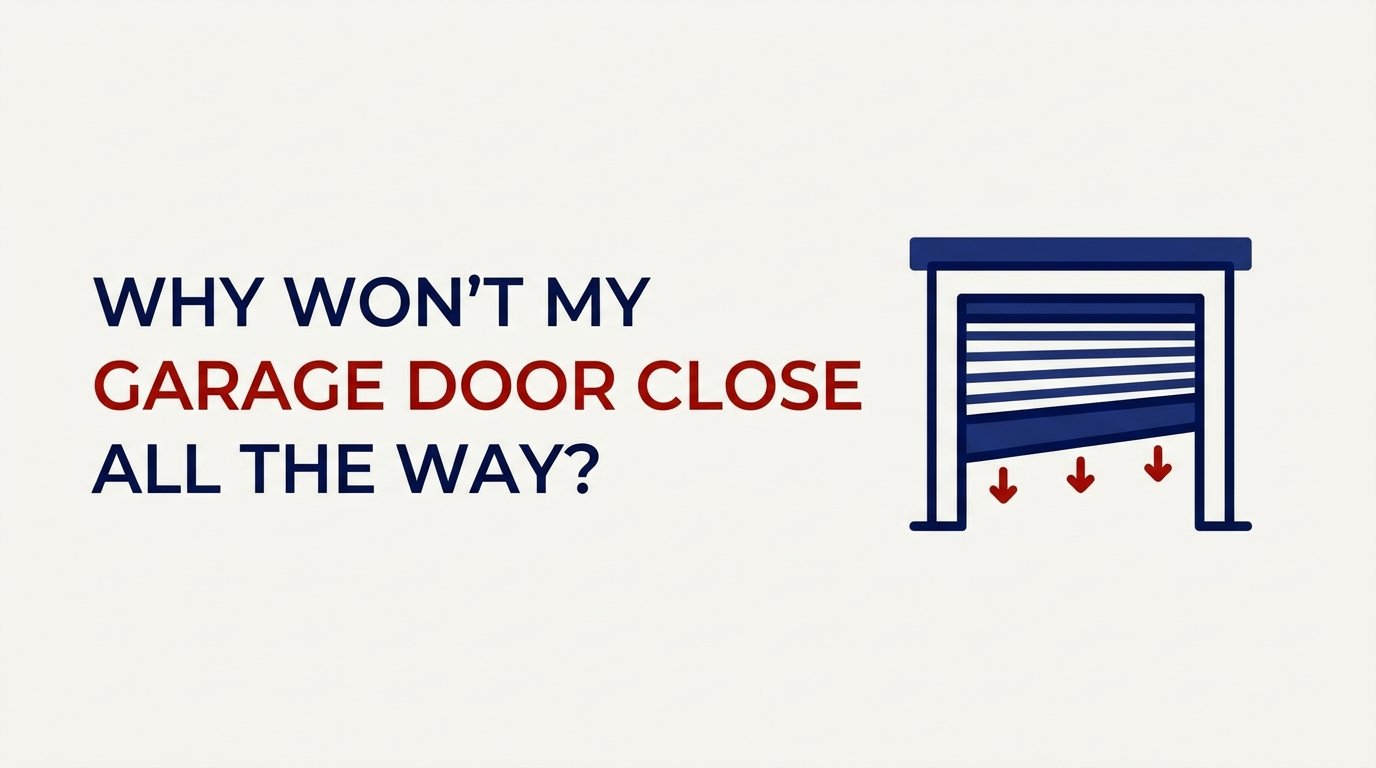
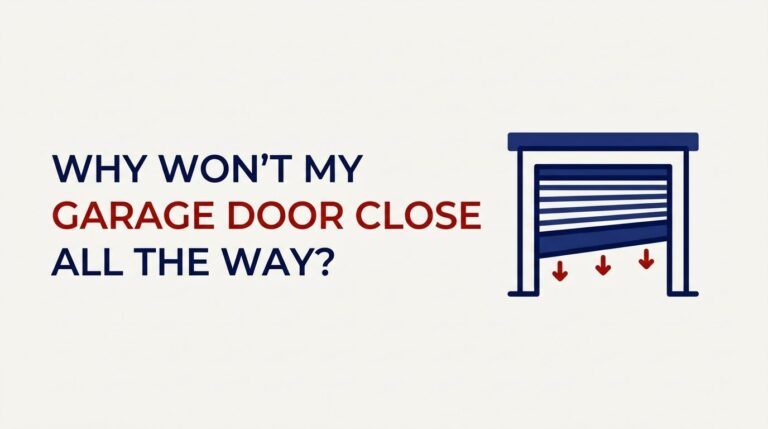
It’s a cold Tuesday evening in Western NY. You pull into the driveway, hit the button on your remote, and watch the door start to lower — then it stops halfway and reverses right back up. Or maybe it creeps down, stalls a few inches from the ground, and just sits there. Either way, you’re standing in a half-open garage wondering what just happened.
This is one of the most common calls we get at 716 Garage Door Repair. The reassuring part? Most of the time, the cause is something identifiable and fixable without a lot of drama. Let’s walk through the likely suspects.
Is Something Blocking the Safety Sensors?
Yes — a misaligned or obstructed photo-eye sensor is the single most common reason a garage door won’t fully close. Before anything else, check those first.
The sensors sit low on each side of the door frame, just a few inches off the ground. They send an invisible beam across the opening; if anything interrupts that beam, the door reverses as a safety measure. The problem is that “something” doesn’t have to be a person or a pet. In Western New York, we see this constantly: a dusting of snow near the base of the door, a cobweb across the lens, a bike leaned against the wall, or just a layer of grime that’s built up over the season.
Here’s the quick check: look at the indicator lights on both sensor units. Both should be solid — typically one green, one amber. If one is blinking or dark, that’s your signal. Wipe each lens gently with a dry cloth and see if the light steadies. If they’re still misaligned, loosen the mounting bracket on the blinking side and nudge it until both lights go solid, then retighten.
If the bracket itself was physically knocked out of position, it may need re-tightening or minor adjustment. That’s a five-minute fix most homeowners can handle on their own.
Could the Limit Switch Be Causing It to Stop Short?
Quite possibly. The limit switch is what tells your opener how far to travel before it considers the door fully closed. When it’s set incorrectly, the opener stops the door early — thinking it’s already reached the floor when it hasn’t.
The signs are pretty recognizable. The door stops a few inches above the ground for no apparent reason, or it touches the concrete and then immediately reverses as if it hit something. That second scenario often gets mistaken for a sensor issue, but the behavior is slightly different — the door actually reaches the ground before bouncing back.
Most residential openers have a limit adjustment dial or screw, usually accessible on the back or side of the motor unit. Turning it incrementally changes how far the door travels. It’s worth checking your opener’s manual for the specific process, since it varies by brand and model. If you have a Hörmann ProMatic or SupraMatic opener, the adjustment procedure is outlined in the unit documentation and is fairly straightforward.
One thing worth knowing: cold temperatures in Western New York can actually affect how your opener behaves. Metal components contract slightly in the cold, and limit settings that worked fine all summer may need a small tweak come January. If you’re not comfortable making that adjustment yourself, a technician can dial it in quickly.
What About the Tracks and Rollers — Could They Be the Culprit?
Absolutely. Bent, dirty, or misaligned tracks are a frequent cause of a door that stalls, binds, or refuses to travel all the way down.
Take a flashlight and look along both vertical tracks. You’re looking for visible dents or bends, gaps between the rollers and the track wall, or rust buildup. In Buffalo’s climate, that last one is genuinely common. The freeze-thaw cycle, road salt in the air, and moisture all accelerate corrosion on metal tracks and rollers — especially on older homes, which make up a large portion of the housing stock around here.
Rollers themselves wear out over time too. Nylon rollers can crack in cold weather, and metal rollers corrode and lose their smooth rotation. Either situation creates friction that the opener struggles to push through.
One thing to avoid: don’t try to hammer a bent section of track back into shape on your own. It seems like a reasonable fix, but it almost always creates new alignment problems and can create a genuine safety risk if the door binds under load. Track realignment and roller replacement are quick, routine jobs for a technician — much faster and safer than a DIY attempt gone sideways.
Are the Springs or Cables Preventing It from Closing Properly?
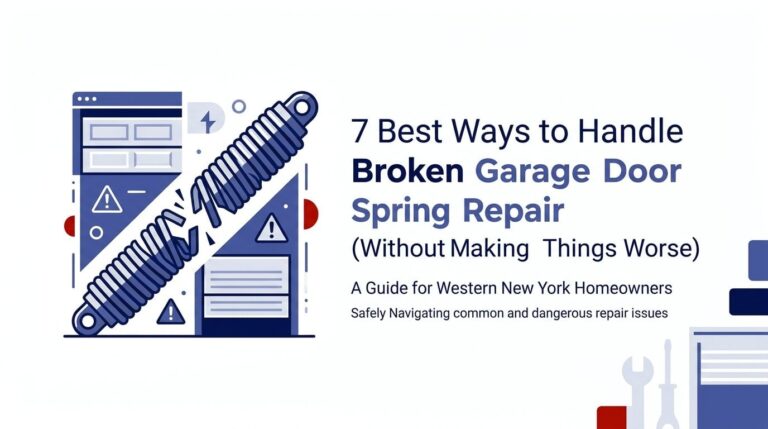
A worn or broken spring can absolutely stop a door from closing the way it should. Springs do the heavy lifting — they counterbalance the weight of the door so the opener doesn’t have to strain. When a spring weakens or snaps, the opener is suddenly working against a much heavier load and often can’t complete the travel.
Watch for these signs: the door feels unusually heavy when you try to lift it manually, it moves unevenly with one side lower than the other, or you heard a loud bang from the garage at some point (that’s a classic broken spring sound). Frayed or snapped cables are a related concern — they can cause the door to tilt and bind in the tracks mid-travel.
If you have a Hörmann door, it likely came with a high-cycle spring assembly designed for longevity. But even quality hardware has a lifespan, and those springs do eventually wear out regardless of the brand.
Safety note: Do not attempt to adjust or replace torsion springs yourself. The tension stored in those springs is significant, and a release gone wrong can cause serious injury. This is a job for a trained technician, full stop. Spring repair is one of the most frequent calls we handle across Buffalo, Rochester and the surrounding area.
Could the Cold Weather Itself Be Making Things Worse?
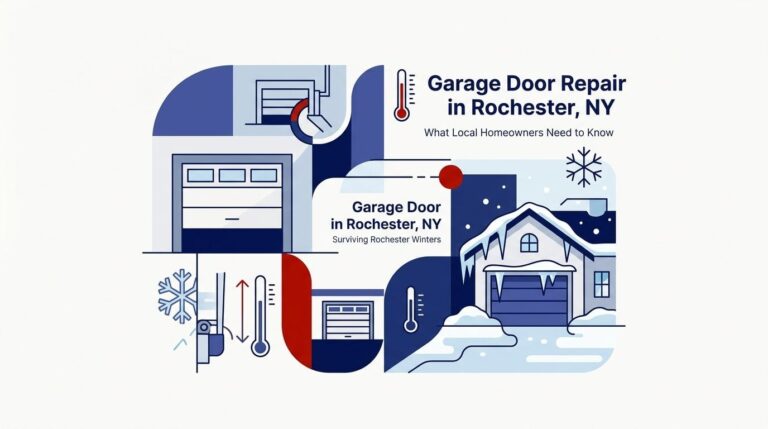
Without question. Western New York winters are genuinely hard on garage doors, and cold temperatures affect nearly every moving part in the system.
Metal contracts in the cold, which can cause tracks to narrow slightly and springs to become more brittle. Lubricant thickens or dries out, increasing friction throughout the mechanism. And one of the most overlooked winter issues: the rubber bottom seal freezing to the concrete. When that happens, the opener hits its force limit and reverses the door rather than risk damaging the motor. Frustrating as it is, that’s actually the system protecting itself.
For the frozen seal situation, don’t yank the door open repeatedly — you risk tearing the seal or straining the opener. Instead, carefully break the seal free and apply a lubricant rated for cold-weather use along the bottom edge and the tracks. Skipping seasonal lubrication is one of the most common oversights we see, and it causes real problems by February.
Homeowners in Tonawanda, Lockport, Penfield and throughout Western New York deal with this every winter. It’s not unusual, and it’s very fixable once you know what you’re looking at.
When Is It Time to Stop DIYing and Call Someone?
If the problem is sensors or a limit switch adjustment, those are reasonable things to tackle yourself. But if you’ve checked both and the door still won’t close — or if you suspect springs, cables, or a bent track — it’s time to call a professional.
Springs and cables carry significant stored energy. Attempting repairs without proper training and tools is genuinely dangerous, not just inconvenient. We hear from homeowners who’ve tried it and regretted it. The repair cost is almost always less than the ER visit.
Most garage door problems, when handled by someone who works on them every day, are resolved in a single visit. No guesswork, no second trip. At 716 Garage Door Repair, we work with homeowners across Buffalo, Tonawanda, and Western New York — friendly technicians, straightforward pricing, no surprises on the invoice. If you’re not sure what’s wrong, just describe what the door is doing and we can usually point you in the right direction before anyone even shows up.
Putting It All Together
Most of the time, a garage door that won’t close all the way comes down to one of these five things: sensor obstruction or misalignment, a limit switch that needs adjustment, worn or damaged tracks and rollers, a spring or cable issue, or weather-related interference. Each one is diagnosable in a few minutes once you know what to look for.
Start with the sensors — they’re the most common cause and the easiest to check. Work through the list from there. If you hit something that feels beyond your comfort level, don’t push it. Scheduling online is easy! and we’re happy to take a look and give you an honest assessment of what’s going on.
























 Tap to Call: (716) 608-0053