
Picture this: it’s a Tuesday morning in January, the temperature dropped overnight, and you’re already running a few minutes behind. You hit the button to open the garage door, and nothing happens. You hit it again. Still nothing. That sinking feeling is something a lot of Rochester homeowners know well, and it almost always seems to happen at the worst possible time.
Garage door problems are genuinely common in this part of New York. The climate here is tough on mechanical systems, and most homes in the area have attached garages, which means a broken door isn’t just an inconvenience — it affects your daily routine and your home’s energy efficiency. This guide is meant to give you straightforward, practical information about what causes garage door issues in Rochester, what to do when something goes wrong, and how to keep your door in good shape through whatever winter throws at it.
Why Rochester’s Climate Is Particularly Hard on Garage Doors
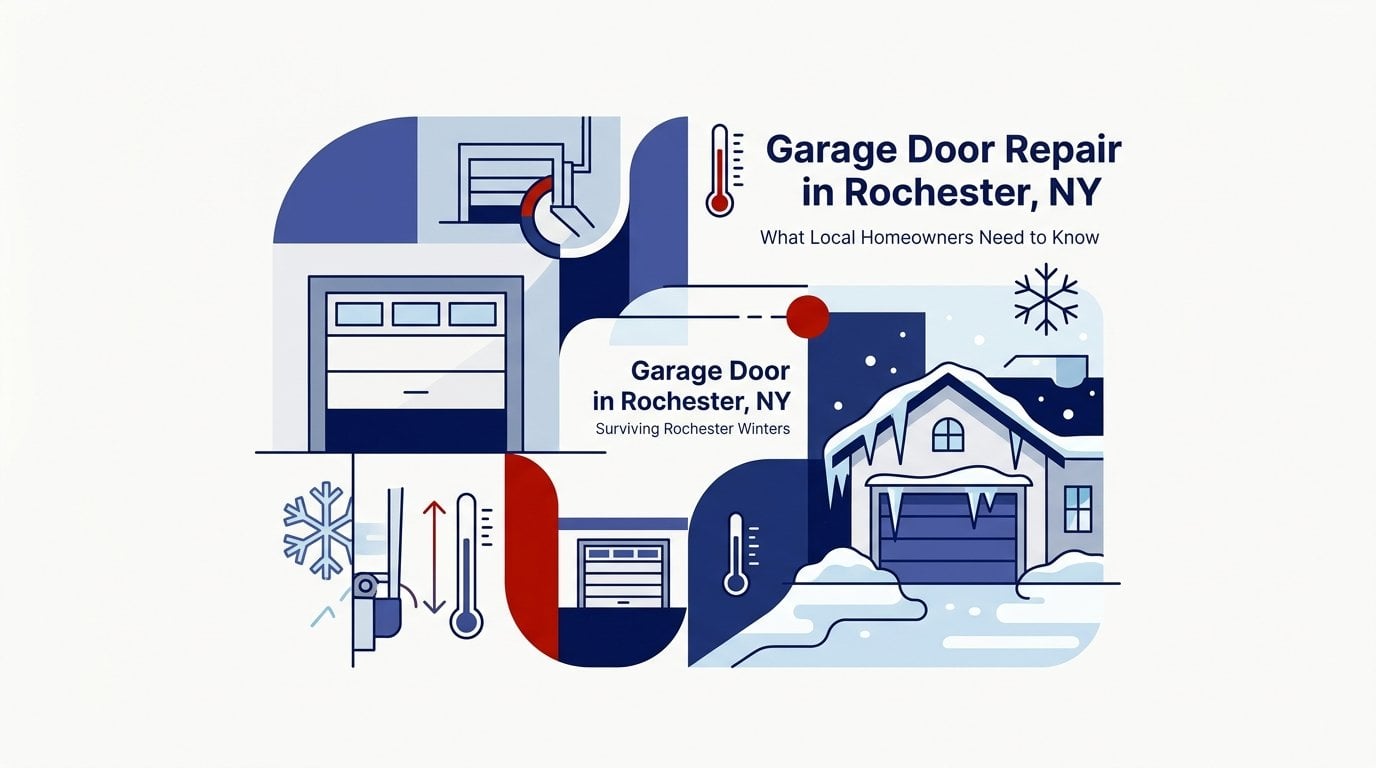
Rochester sits in a demanding climate zone. Lake-effect snow off Lake Ontario, extended freeze-thaw cycles, and sustained cold stretches put real stress on mechanical systems in ways that homeowners in milder regions simply don’t deal with.
The biggest issue is what cold temperatures do to metal components. Springs, cables, and rollers are all made of metal, and metal contracts in the cold. When temperatures drop sharply, springs that were already worn or marginal can lose their remaining flexibility and snap. A spring that was holding on through October might give out on the first genuinely cold morning in December. This is why spring failures spike in Rochester every winter, often on the coldest days of the season.
Freeze-thaw cycles add another layer of wear. Water works its way into small gaps, freezes, expands, and then thaws again. Over time, this damages weather seals, warps panels, and contributes to track misalignment. It also accelerates rust on hardware, especially in homes near roads that get heavy salt treatment throughout winter. That road spray coats the bottom of your door, the tracks, and the hardware over months and years, and it adds up.
Neighborhoods like Greece, Irondequoit, Webster, and Pittsford all have significant older housing stock, which means many homeowners are working with garage door systems that weren’t designed with modern cold-weather materials. Older springs and cables are more vulnerable, and that’s something worth keeping in mind as your system ages.
The Most Common Calls We Get from Rochester Homeowners
If you’re dealing with a garage door problem right now, there’s a good chance it falls into one of these categories.
Broken torsion or extension springs: This is by far the most frequent repair call, especially after a cold snap. When a spring breaks, the door becomes too heavy for the opener to lift, and it simply won’t go up. You might hear a loud bang from the garage (that’s the spring snapping), or you might just find the door unresponsive. Either way, a broken spring means the door is out of service until it’s replaced.
Damaged or misaligned tracks: Ice buildup along the bottom of the door, or a minor bump from a car or bike, can knock a track out of alignment. When this happens, the door might stick, grind, or come off-track entirely. This is one of those problems that tends to get worse if you keep operating the door, so it’s worth addressing quickly.
Failed weather seals and bottom sweeps: This is a common complaint in older Rochester homes. When the rubber seal along the bottom of the door deteriorates, you start noticing drafts along the garage floor, water seeping in after rain or snowmelt, and sometimes evidence of mice or other pests getting through the gap. It’s an easy thing to overlook until it becomes a real problem.
Opener issues: Cold temperatures can affect the opener’s motor and circuit board, and older openers sometimes struggle in sustained cold. If the door moves slowly, reverses unexpectedly, or responds inconsistently to the remote, the opener may need service or replacement.
What to Do When Your Garage Door Stops Working
The first thing to know: don’t force it. If the door feels unusually heavy or is only partially open, forcing it up or down can damage the tracks, strain the opener motor, or make a manageable repair into a bigger one. It’s a natural instinct to push or pull, but resist it.
Here’s what you can safely do on your own:
Most openers have a manual release cord, usually a red rope hanging from the trolley. Pulling it disengages the opener so you can move the door by hand. This lets you get the car out if you need to, and it helps you assess whether the door moves freely or feels stuck and heavy.
Check for obvious obstructions in the tracks or along the floor. Sometimes ice buildup along the bottom seal freezes the door to the ground overnight. Carefully breaking that seal with warm water (not a pry bar) can solve the problem without any professional help needed.
What you should not attempt: spring replacement. This is one of those repairs that looks straightforward but carries real risk. Torsion springs are under significant tension, and replacing them without the right tools and training can result in serious injury. This is genuinely a job for a professional, every time.
As for urgency: a door stuck open in January is an emergency — call right away. A broken spring that leaves the door closed is also urgent since you’re without access. A slow opener or a minor cosmetic dent can usually be scheduled at your convenience.
What Garage Door Repairs Typically Cost in Rochester
Pricing varies based on what needs to be fixed. Spring replacement is typically one of the more affordable common repairs, especially when the springs are a standard size that a technician carries on their truck. Cable repairs and roller replacements also tend to be on the lower end of the cost range.
Panel replacement is more variable. The cost depends on the door’s material, age, and whether a matching panel is still available. For older doors, finding an exact match can be difficult, and sometimes a full door replacement makes more financial sense than replacing a single panel that doesn’t quite match.
Opener replacement sits in its own category and depends heavily on the type of opener, the drive system, and any smart-home features you want included.
What matters most is getting a clear, upfront estimate before any work begins. A reputable local company will tell you exactly what the repair involves and what it costs before touching anything. If a technician is vague about pricing or pushes you toward a larger job without explaining why, that’s worth paying attention to.
Keeping Your Door Running Through a Rochester Winter
A little maintenance in the fall goes a long way when January hits.
Lubricate moving parts before the cold arrives: Springs, rollers, and hinges all benefit from a coat of garage door lubricant in late October or early November. This helps metal components stay flexible in cold temperatures and reduces wear over the season. Avoid WD-40 for this — it’s a solvent, not a lubricant, and it can actually strip protective coatings.
Check your weather seals in the fall: Run your hand along the bottom seal and the side seals when the door is closed. If you feel cold air or see daylight, the seals need replacing before winter sets in.
Clear ice from the bottom of the door: After ice storms, check that the door isn’t frozen to the ground before running the opener. A frozen door that the opener tries to force open can damage the motor or strip the drive gear.
Signs your door needs professional attention before it becomes an emergency: unusual grinding or squealing noises, visible rust on springs or cables, uneven movement where one side lifts faster than the other, or a door that’s noticeably slower than it used to be. These are all early warnings worth acting on before they turn into a cold-morning crisis.
How to Choose a Garage Door Company in Rochester
The garage door repair market has its share of companies that aren’t particularly local. Some operate through national call centers, dispatch whoever is available, and leave homeowners with vague quotes and unexpected charges. It’s worth knowing what to look for.
A good local company has a real local address, answers the phone with someone who knows the area, and sends a technician who can explain what’s wrong and what the fix involves in plain language. Transparent pricing before the work starts is non-negotiable. And a trustworthy technician will tell you honestly whether repair or replacement makes more sense for your situation, rather than defaulting to the more expensive option.
Red flags: no verifiable local address, pressure to replace parts that don’t need replacing, or a quote that changes significantly once the technician is on-site.
716 Garage Door Repair serves the Rochester area and surrounding communities including Greece, Webster, Pittsford, Henrietta, and beyond. As a locally owned company, we know what Rochester winters do to garage doors, and we show up ready to fix the problem the right way.
Quick Answers to Common Questions
Can I use my garage door with a broken spring?
How long do garage door springs typically last in a cold climate?
Is it worth repairing an older door or replacing it?
Putting It All Together
Garage door problems are stressful, especially when they happen in the middle of a Rochester winter. The good news is that most repairs are straightforward when you have a local team that knows the area and shows up prepared.
Whether you’re dealing with a broken spring, a door that won’t seal properly, or an opener that’s acting up, the right move is getting a professional out to take a look before a minor issue becomes a major one. We serve homeowners across the Rochester area, Buffalo, Lockport, and throughout Western New York, and we’re happy to give you a straight answer about what your door needs and what it’ll cost.
If your garage door needs attention, don’t wait until it fails at the worst possible moment. Scheduling online is easy! Or give us a call and we’ll get you taken care of.




















 Tap to Call: (716) 608-0053